John Ware: troubling light on The Troubles


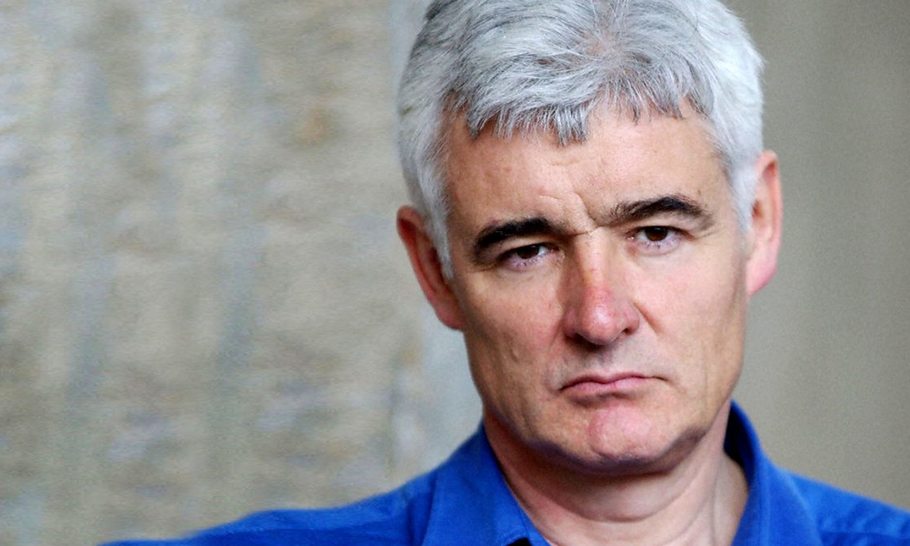
John Ware
Investigative journalism is a great way to make powerful and/or dangerous enemies and for lawyers to guarantee that investigations will need big budgets. Even without punishing legal proceedings, the work takes time, and time costs money. With an impressive portfolio of articles, books and TV productions dating back to the 1970s, John Ware is a notable survivor of a rare breed of journalist.
Ware’s new book Neither Confirm Nor Deny: British Intelligence, Lawless Agent Running and the Suppression of Truth (Merrion Press, 352 pp, £18.99) was published a few weeks ago. It exposes and sifts the dirt in the dirty war known in Ireland as The Troubles. It is a gift of truth for the many families of innocent victims whose deaths have been left uninvestigated, allegedly for national security reasons.
“Neither Confirm Nor Deny” is the refrain dear to the British Intelligence Services, used repeatedly by the Royal Ulster Constabulary, RUC, MI5 and the FRU, the Army’s Force Research [agent running] Unit, and then by the British government. It served to hide the crimes of the extraordinary number of covert agents who had penetrated rival loyalist and nationalist organisations and their armed wings: notably the Irish Republican Army (IRA), Ulster Defence Association (UDA) and Ulster Freedom Fighters (UFF). To survive and to harvest the hoped-for high quality intelligence, highly placed agents colluded in extreme violence. Ware struggles with this moral dilemma throughout the book.
The story focuses on the actions of two figures, Brian Nelson and Freddie Scappaticci (known as “Stakeknife”) and their handlers, chronicling how they engaged or were complicit in abductions, torture and killings of IRA targets. Nelson was embedded in the UDA. Scappaticci worked his way up to a critical senior position in the IRA’s Internal Security Unit (ISU), and was in charge of compiling their assassination lists, participating to a prodigious degree in the commission of murders. Stakeknife was in the habit of being in proximity to killings or abductions, too often to absolve him of responsibility for them. He led a charmed life, getting away with reckless behaviour for decades. Even his wife did not know he was working for the British.
Evidence, meticulously compiled by Ware from FRU contact forms (CFs), recording meetings with the two agents, indicates that even when Nelson and Scappaticci warned in good time of a planned assassination, no action appears to have been taken to protect the target.
Ware’s account suggests that senior officers in the different intelligence agencies valued their agents and potential intelligence “take” more than the lives of potential and actual targets, however slim the evidence that they were active IRA members. These officers were not themselves facing, and did not have the excuse of facing, the danger which their agents faced every day.
It was in September 1989, in response to great pressure and very late in the day, that Nelson and Scappaticci became enough of a concern for the Chief Constable of the RUC, Hugh Annesley (later Sir Hugh), to initiate an independent investigation. In an attempt to show that the UDA exclusively assassinated IRA gunmen, the UDA had been leaking documents demonstrating collusion between loyalist paramilitaries and the security forces. Chief Constable Annesley asked John Stevens (later Sir John), a future Commissioner of the Metropolitan Police, then deputy chief constable of Cambridgeshire, to undertake the investigation. Laurie Sherwood, a CID inspector, Stevens’s special senior assistant, were the only heroes in this ugly saga. They faced intractable systemic obstruction from the different intelligence services including the withholding of key documents and information as the highest authorities in the different agencies clung to what they hoped was “plausible deniability”.
Stevens established five “secure” offices for his team in a huge central warehouse within the RUC’s 17-acre compound at Seapark, Carrickfergus, on the Antrim Coast. By January 1990 they had enough evidence to prepare for the arrest of Brian Nelson. In the late evening of 16 January, three of Stevens’s staff happened, by chance, to return to the offices. They found their main investigation room, containing key documentation, ablaze. They could do nothing to stop the office burning down with its contents. In Ware’s words they discovered “fire alarms not working, phones not working, intruder detector systems not working in what was supposed to be one of the most secure buildings in the country, all on the eve of the arrest of a FRU agent”. The Northern Ireland authorities concluded someone on Stevens staff had carelessly left a lighted cigarette butt in a bin. Thirteen years later, Sir John Stevens went on the record saying the incident “has never been adequately investigated and I believe it was a deliberate act of arson”. Ware weighs the evidence carefully. It inclines significantly towards Stevens’s considered view.
The intelligence agencies in Northern Ireland were clearly acting on the basic principle that to name – and allow the potential conviction of – an agent would grievously undermine HUMINT (Human Intelligence – rather than technological intelligence gathering) and seriously hamper the recruitment of agents. All manner of things were justified in pursuit of agent protection. To name an agent was out of the question; that their actions should not be totally outside the remit of criminal justice, apparently less so. Britain is not, of course, the only state responding to a national security threat to have condoned assassinations.
The principal front-line handlers who failed to stop targeted killings and their agents who were complicit in them were working for a British army military intelligence unit. For some time even the existence of this unit was kept from Stevens. From the point of view of the military, this was war. Most of the dead named in the cases against Nelson and Stakeknife were the enemy, active members of the IRA. Around the world in warfare, the consequence of treachery is often death.
But several of those killed both by the IRA and by the UDA/UFF, with assistance from British agents, were innocent Catholics and not, as alleged, informers. The irony is that the then Prime Minister, Margaret Thatcher, always insisted that The Troubles weren’t a war between the IRA and Britain. So the IRA were not belligerents. They were criminals and it followed they should be treated as criminals. This included not being given special treatment, even if this meant making martyrs out of the hunger strikers.
Neither Confirm Nor Deny is a book written by a journalist who, with his colleague Geoff Seed, took personal risks and now presents a rigorously researched and balanced account of what happened in Northern Ireland. It is not a book that makes you want to go into the garden and hoist a Union Jack — nor, come to that, an Irish Tricolour. Ware explains – in almost too much detail — how undercover security work during serious conflict can, unimpeded by the law, take an ethical nose-dive. It is to be hoped that this book will make such events, and the moral judgements behind them, much less likely in the future.
A Message from TheArticle
We are the only publication that’s committed to covering every angle. We have an important contribution to make, one that’s needed now more than ever, and we need your help to continue publishing throughout these hard economic times. So please, make a donation.


