Lolita: novel into film

My love is of a birth as rare
As ’tis for object strange and high;
It was begotten by Despair
Upon Impossibility.
Andrew Marvell, “The Definition of Love”
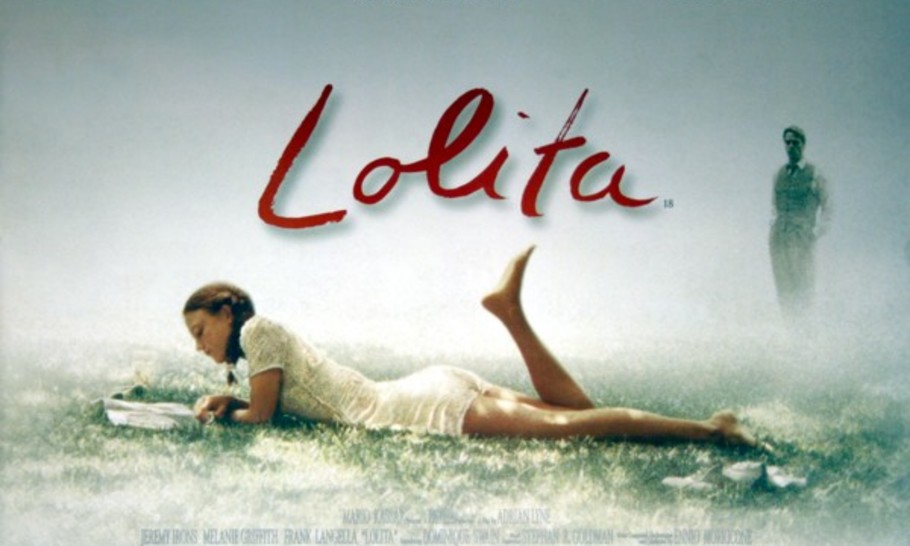
In Lolita (1955), one of the great novels of the century, Vladimir Nabokov constructed a comic and tragic tale, a love story of passion and betrayal. His hero, absurdly named Humbert Humbert, is a disdainful European intellectual waiting to take up a teaching position in New England. He becomes fascinated by the pretty, preteen Lolita, captures her and tries to keep her to himself. Sophisticated readers understood the wit and romance in the story, but the public reacted strongly against it, seeing it as the celebration of a sordid sexual relationship. By preserving the best verbal elements of the novel and adding his own visual innovations, the screenwriter and director Stanley Kubrick transformed it into a brilliant film (1962) that did justice to the novel’s drama and complexity.
I. The Novel
Humbert Humbert, the narrator of Lolita, immediately establishes his witty ironic voice. He describes his continental background, including Nabokov’s most dramatically condensed phrase, recalling how his attractive mother was killed in a freak accident “(picnic, lightning)”. Most important was his childhood infatuation with Annabel Leigh, an allusion to the poem by Edgar Poe, and suggestion of the grotesque elements to come.
Lolita, the daughter of the landlady of the room he rents for the summer, becomes the mirror image and avatar of his idealised love. Both children are “nymphets”, a word invented by Nabokov to define a girl between the ages of 9 and 14, with a mixture of “tender dreamy childishness and eerie vulgarity”. In Humbert’s emotional life Annabel was replaced by his first wife Valeria, now deceased. At the beginning of the story Humbert has lost his affective attachments and is alone. Like Nabokov, he has little money and finds himself in an alien culture. Humbert is supposed to be writing a simplified history of French literature for English-speaking students, a reminder of Nabokov’s own condescending and sometimes baffling teaching at Cornell.
The novel also provides a few details about the background of Quilty, Humbert’s rival in the struggle for Lolita. Born in New Jersey in 1911, he was educated at Columbia University and became a successful dramatist. His unusual name, which suggests quietly and guilty, has a rich literary heritage. Daniel Quilp is the malicious, deformed and cruel moneylender in Charles Dickens’ The Old Curiosity Shop (1841). Peter Quint is the deceased, ghostly valet in Henry James’s The Turn of the Screw (1898), who haunts his old country house and has supposedly corrupted the child Miles.
Almost all the learned literary and sly sexual allusions in the novel are inevitably lost in the film. Photographs of André Gide, Peter Tchaikovsky, Norman Douglas and the dancer Vaslav Nijinsky appear in the study of a homosexual colleague. The titles of plays suggest Humbert’s orgasms in Sunburst and sexual assaults in Touch and Go. Charlotte Haze delivers the virginal Lolita to the sexual depredations of her near-namesake Charlie Holmes, who seduces Lolita at Lake Climax before Humbert can seize and possess her. Beardsley College for Girls alludes to the decadent homosexual artist Aubrey Beardsley and to women’s pubic hair. Beaver Eaters are not only the Beef Eaters, palace sentries and scarlet guards, but also suggest eating beavers and oral sex. Nabokov connects sex and murder when Humbert “pulled the pistol’s foreskin back, and then enjoyed the orgasm of the crushed trigger.” The satiric pseudo-Freudian advice of the Beardsley teachers, Miss Pratt (British slang for “bottom”) and the fiery Miss Redcock, is given in the film to the demonic Quilty, who impersonates Dr. Zempf. The teachers claim, in a wildly mistaken diagnosis of Lolita, that the “fifteen-year-old Dolly remains morbidly uninterested in sexual matters.”
Nabokov resists calling Charlotte Haze, Hazel Haze, to match the double humble Humbert. The vulgar antithesis of her delectable daughter Lolita, Charlotte is lonely, pretentious, phony, vulgar, crude and sexually aggressive. Humbert condemns “her heavy hips, round knees, ripe bust and coarse pink skin”. She nags and criticizes Lolita, tries to exclude her sexual rival and obtain complete possession of Humbert. Charlotte calls him “Hum”, Lolita calls him the chummy “Hummy”. Charlotte is horrified when she reads Humbert’s savage portrayal of her in his secret diary: “The Haze woman, the big bitch, the old cat, the obnoxious mamma, the—the old stupid Haze.” She furiously screams, “you’ll never, never see that miserable brat again.” Like Myrtle Wilson in The Great Gatsby, Charlotte becomes hysterical when her lover rejects her. She rushes out of the house, dashes into the street and is fatally hit by a car.
Nabokov creates an amusing contrast between Humbert’s educated speech and Lolita’s teenaged American slang: “I think you stink,” “Lay off, will you”; between his intellectual refinement and her debased taste for cokes and shakes, comic books and movie magazines. In one of their dialogues, she casually confesses that she has lost her virginity at summer camp, which he refuses to believe. She cheekily urges him to make the first sexual move that soon leads to her seduction:
Humbert: I missed you. I missed you a lot.
Lolita: Well I haven’t missed you. In fact, I’ve been revoltingly unfaithful to you. But it doesn’t matter, because you don’t care about me anymore anyway.
Humbert: What makes you think I don’t care about you?
Lolita: Well you haven’t kissed me yet, have you?
Humbert later calls her the “knowing, cheerful, corrupt and compliant Lolita,” and crucially declares (a point often missed by the critics) “it was she who seduced me”.
The novel includes Humbert’s explicit sexual descriptions of his lust for the 12-year-old nymphet Lolita. The lodger-lover, disgusted by Charlotte, is bewitched by her daughter. His first sight of Lolita in the garden instantly recalls Annabel Leigh: “the same frail, honey-hued shoulders, the same silky supple bare back, the same chestnut head of hair. A polka-dotted black kerchief tied around her chest hid from my aging ape eyes, but not from the gaze of a young memory, the juvenile breasts I had fondled one immortal day.” Later on, influenced by the scene in Joyce’s Ulysses when Leopold Bloom ejaculates while staring at Gerty MacDowell’s underwear, Humbert has an orgasm. He experiences “the magic friction,” when Lolita’s “two sunburnt legs, resting athwart my lap,” arouses his erection, “the hidden tumor of an unspeakable passion.” He also describes Lolita, delightfully naked and photographic, in the hermetic seclusion of their hotel room: “her honey-brown body, with the white negative image of a rudimentary swimsuit patterned against her tan, presented to me its pale breastbuds; in the rosy lamplight, a little pubic floss glistened on its plump hillock.” Despite his rapturous obsession, it’s clear in the novel that the apparently innocent Lolita actually dominates and controls Humbert. She threatens to expose and imprison him, and he knows perfectly well what will happen to him and where he will go if the police find out he has committed rape.
The greatest fear of the jealous and suspicious Humbert is that Lolita “might accumulate sufficient cash to run away”, and the cunning child actually manages to escape from both Humbert and Quilty. The novel picks up speed and interest when Quilty appears, but in both novel and film we never see Lolita alone with him. Humbert both explains and condemns his quasi-incestuous sex with an orphan by contrasting his calculated carnality to her dreamy sweet radiance. He experiences waves of desire, misery, pain and desperation, the gnawings of his broken heart. Alluding to his penis as his fifth limb, he confesses that he “was a pentapod monster.” But he also expresses his deepest feelings and perverse idealism by insisting, “I loved you. I was despicable and brutal, and turpid, and everything, but I loved you.” He also repeats, “I loved her. It was love at first sight. I loved her more than anything I had ever seen or imagined on earth.”
Bitterly comparing Quilty and Humbert, Lolita tells her stepfather with a devastating “merely”: “He broke my heart. You merely broke my life.” Humbert is forced to admit that “an American girl-child named Dolores Haze had been deprived of her childhood by a maniac.” But he believes that Quilty, who has slept with both Charlotte and Lolita, is even more corrupt than he and deserves to be killed. He laments that Quilty “had sodomized my darling,” and “succeeded in thoroughly enmeshing me and my thrashing anguish in his demonical game.” Like “riverrun” repeated in Finnegans Wake, the first and last words of the novel are “Lolita.”
II. The Film
Although Humbert is portrayed more negatively in the novel, where masks and mirrors emphasize his dubious double name and expose his dual nature, James Mason’s narration establishes his point of view, and gives the audience the guilty pleasure of sympathising with a criminal. Peter Sellers is inspired as the predatory and vicious Quilty, whose comical and threatening role-playing contrasts with Humbert’s dignified and professorial demeanor. Quilty’s relentless pursuit makes Humbert’s love for Lolita more ambiguous and pathetic. Both of them are sexual predators, but Quilty is a callous manipulator, Humbert a man desperately in love. Shelley Winters is perfect as Charlotte, and the self-possessed and accomplished Sue Lyon is a convincing Lolita. Lyon was 14 when she was cast, 15 when she completed the film. The strict censorship laws ruled that she was too young to attend the premiere.
The film follows the sequence of the novel, but Kubrick cleverly frames the plot by beginning and ending with Humbert’s murder of Quilty. Beginning this way arouses our interest in Humbert’s motives and Quilty’s character, and alerts us to Quilty’s pernicious reappearances throughout the film. Humbert had planned to kill Charlotte with the same pistol he actually uses to kill Quilty. The final act of the film shows the murder is cathartic, as Humbert kills his evil alter-ego.
Kubrick’s innovative and amusing scenes are worthy of Nabokov’s high art. Humbert slavishly painting Lolita’s toenails appears in the opening titles and imitates Edward G. Robinson polishing Joan Bennett’s toenails in Scarlet Street (1945). Humbert sits between Charlotte and Lolita at a drive-in horror movie, both seeking attention and clutching his hand. Lolita’s high school boyfriends are the alliterative Rex and Roy, whose names both mean “king.” The school play, written by Quilty and starring Lolita, shows her first involvement with Quilty and provides another occasion for Humbert’s jealousy. In an absurd piece of theater Humbert celebrates Charlotte’s death with a whisky in the steaming bathtub, while the distraught father of the driver who killed her describes and apologises for the accident. He offers to pay for her funeral, which Humbert graciously accepts. Humbert takes Lolita away from the summer camp and, concealing her mother’s death from her, stops overnight at a country hotel. In the novel the hotel is host to a religious convention; in the film it becomes a more threatening police convention. Kubrick includes a classic slapstick scene when a collapsing hotel cot delays Humbert’s long-awaited seduction. Later, when Lolita has been kidnapped by Quilty, and has escaped from Humbert, he comically wrestles in the hospital with two burly medical aides, carrying a straitjacket, as he desperately searches for her.
Quilty, at first accompanied by his sombre and silent girlfriend Vivian Darkbloom (her name is an anagram for Vladimir Nabokov), appears in four major scenes with Humbert. First, at their confrontation in Quilty’s chaotic, spooky, Poe-like ancestral mansion on Grimm Road, where Peter Sellers improvised his own dialogue. Then, on the terrace of The Enchanted Hunters hotel, where Quilty immediately sees through Humbert’s subterfuge and realizes that he’s having sex with Lolita. Quilty asks: “Where the devil did you get her?” “I beg your pardon?” “I said: the weather is getting better.” “Seems so.” Quilty sets out to torture and punish Humbert, and to steal Lolita. Both Humbert and Quilty are enchanted hunters (as in fairy tales), enchanted and disenchanted by Lolita as they hunt her.
Next, Quilty torments and deceives Humbert in his Beardsley home when disguised as the school psychologist Dr. Zempf. His name sounds like Senf, “mustard” in German, a clue to Quilty’s sharp and bitter character. The strongly accented Zempf, who can’t pronounce “th,” threatens him by declaring: “Well, Dr. Humbarts, to you she’s still za liddle girl what is cradled in za arms. But to doze boys over dare at Beardsley High, she’s a lovely girl, you know, mit mit mit mit mit de sving, you know, und zat jazz”—that stuff and nonsense. The five “mits” delay the euphemistic revelation of Lolita’s irresistible sex appeal and pursuit by the horny high school boys. Sving suggests Fragonard’s voyeuristic painting The Swing, as well as swing music and contemporary swingers, both alien to Humbert. Zempf changes the surgical name of his colleague Dr. Cutler to Dr. Cuddler, suggesting a sinister fondling.
Quilty’s two indirect encounters with Humbert are both amusing and unnerving. He pursues and frightens Humbert and Lolita by following their car, and makes a menacing phone call to Humbert’s motel room. Their final meeting returns to the first scene in the cluttered mansion, with Quilty teasing and mocking him until the end. Humbert’s love story concludes sadly in his last meeting with the married and pregnant Lolita, who refuses to run away with him.
Throughout the film Humbert prepares his defence by addressing an imaginary jury. While in prison after murdering Quilty, he’s written the narrative that combines revelation and exculpation. The titles at the end reveal that Humbert has died of a heart attack in prison, and that Lolita and her baby both died in childbirth. Frustrated hopeless love dominates the mood of the film: Charlotte loves Humbert, Humbert loves Lolita, Lolita loves Quilty. All four characters die at the end, consumed by the tragic passion of their dark fairy tale.
Lolita was shot in England, but a second unit filmed the driving and motel scenes in America. Nabokov wrote the original screenplay, which would have taken seven hours to film. It was rejected, but he was paid $100,000 and got credit for the basic script that was rewritten by Kubrick. The hard-to-please Nabokov liked the film, especially the scene when Lolita drops a fried egg into Humbert’s open mouth, as if she were feeding an animal, and tells him, “You can have one little bite.” Nabokov writes: “The four main actors deserve the highest praise. Sue Lyon bringing that breakfast tray or childishly pulling on her sweater in the car—these are moments of unforgettable acting and directing. The killing of Quilty is a masterpiece; and so is the death of Mrs. Haze. Kubrick was a great director, and his Lolita was a first-rate film. Quite a few of the extraneous inventions (such as the macabre ping-pong scene [which delays Quilty’s murder] or Humbert’s rapturous swig of Scotch in the bathtub) struck me as appropriate and delightful.”
Jeffrey Meyers, FRSL, has had thirty-three books translated into fourteen languages and seven alphabets, and published on six continents. Forty-Three Ways of Looking at Hemingway came out in November 2025. The Biographer’s Quest appeared with Mercer University Press in April 2026.
A Message from TheArticle
We are the only publication that’s committed to covering every angle. We have an important contribution to make, one that’s needed now more than ever, and we need your help to continue publishing throughout these hard economic times. So please, make a donation.


