The new triumvirate of tennis

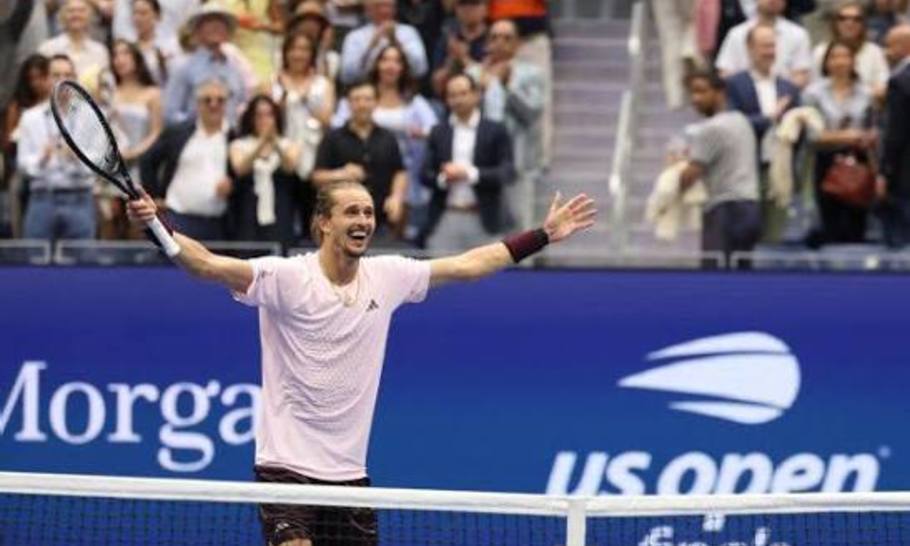
Alexander Zverev beats Ben Shelton to win US Open
Six years ago, at the 2020 US Open Men’s singles final, the German-Russian Alexander Zverev lost to Austria’s Dominic Thiem in five sets, having led by two sets to love. He served 15 double faults in that match. More crucially, he served them at critical points. The German player had acquired a reputation as “the choker”.
It took another four years for him to reach another Grand Slam final, where he lost again in five sets, this time to Carlos Alcaraz.

Carlos Alcaraz
When Alcaraz and Jannik Sinner came along, they started to clean up. Between them, they shared nine consecutive Grand Slam Titles from 2024 to 2026. With Alcaraz aged 23 and Sinner 25, it seemed that Zverev, now 29, was destined to become the “nearly man”.
But this year, he finally got the monkey off his back. Taking advantage of both Sinner and Alcaraz being injured, he claimed his first Grand Slam title at the French Open. The Choker appears to have finally relaxed.
On Sunday, he breezed past the local boy Ben Shelton, 23, in a fairly straightforward four-set victory. Sinner was again out injured, while a rusty Alcaraz lost in the semis to Shelton in a late-night, fifth-set tiebreak thriller.
Shelton was clearly exhausted from that 3.30 a.m. finish and, playing in his first Slam final, he also looked nervous in front of his home crowd. His shots, for the most part, lacked depth and power, while his topspin ground shots played straight into the waist-high hitting zone of the 6’6” German, who took full advantage.
To say that Zverev is not a crowd favourite is an understatement. And talking of “choking”, in 2020 Zverev was accused of doing just that to his then-girlfriend, Brenda Patea. A criminal court issued a fine of $488,000 due to what was seen as compelling evidence to support the accusation. Oly Sharypova, another former partner, also alleged that Zverev had abused her, claiming that he punched her in the face and smothered her with a pillow.
It’s difficult not to take those accusations seriously when witnessing some of his on-court meltdowns. He was thrown out of the Mexican Open in 2020 for thwacking the umpire’s chair dangerously close to the official’s foot while yelling abuse at him. He was fortunate not to be further suspended from the tour.
But let’s look on the bright side. Perhaps tennis needs him.
I wrote in an earlier article that the sport had lost its “bite” with the dominance of the top two men, Alcaraz and Sinner. Here were two players so likeable it was difficult to take sides. And if you don’t mind who wins a match, it can become boring.
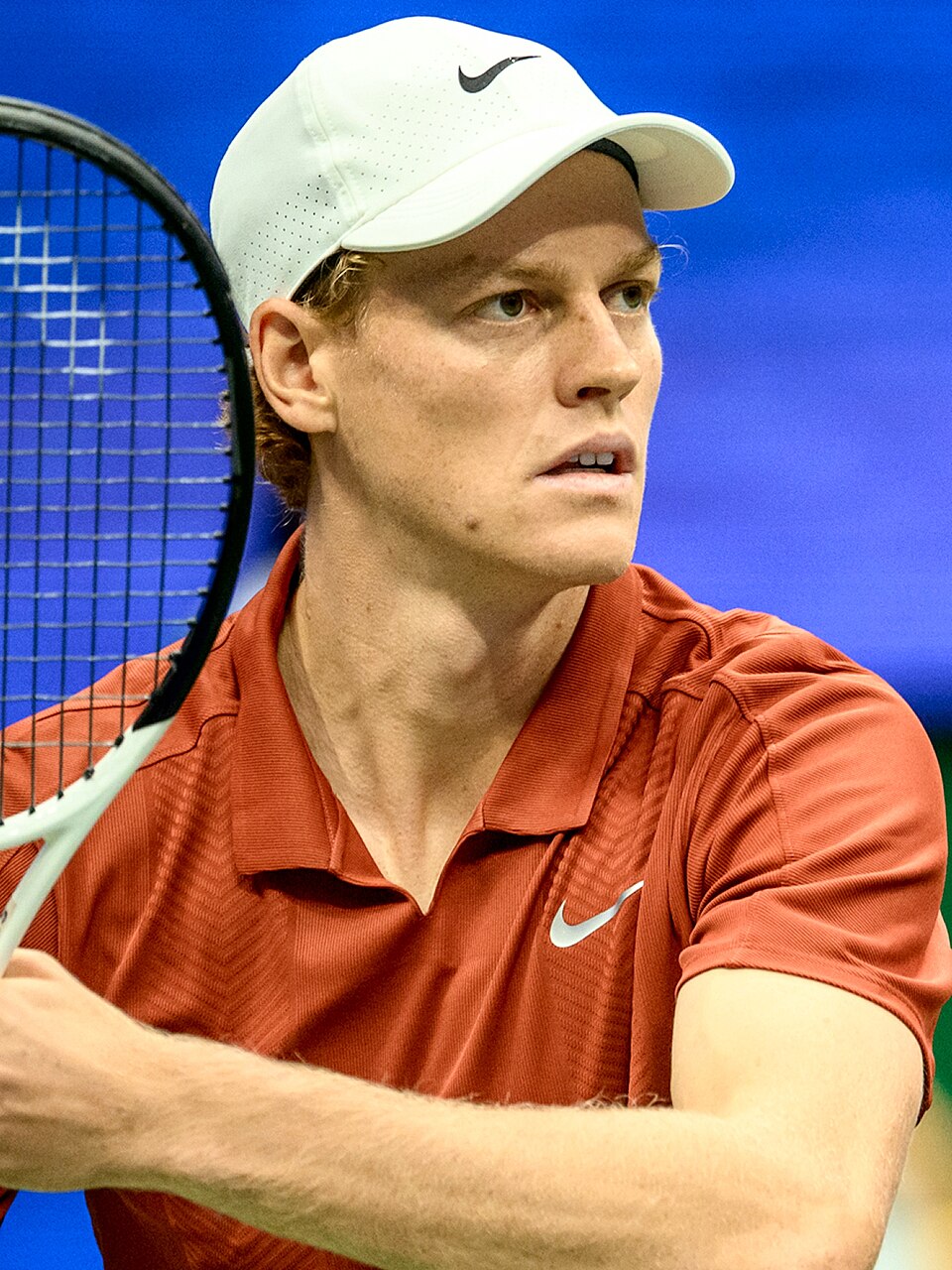
Sinner at the 2025 US Open
Now we have a villain: a player most of the crowd want to lose.
Now who does that remind you of?
The Serb player, Novak Djokovic, of course.
Rafael Nadal and Roger Federer were adored both as players and personalities. They were generally seen as gentlemen. Djokovic, far less so. Like Zverev, his temper was legendary – breaking rackets, screaming at his box, angrily snatching towels from the ballboys.
It made for exciting contests, especially once he started taking on the crowd, ninety per cent of whom were usually against him. Initially, he couldn’t understand why he wasn’t loved — and it hurt. But then, realising that chasing popularity was a lost cause, he actually started relishing the hostility. He started deliberately winding the crowds up.
At Wimbledon in 2019, Djokovic beat Federer after saving match points. The volume of “Roger, Roger” chants was deafening. You may dislike the man, but that was an extraordinary achievement.
There’s another thing Zverev and Djokovic have in common: the interminable ball bouncing before the serve. This habit is irritating for both the crowd and the opponent.
There is a 25-second time limit for a player to begin their first serve after the previous point ends and Zverev pushes it to the limit, sometimes bouncing that ball as many as 17 times. When he was finally warned for the time violation, the crowd roared its approval.
The problem is, however, that there is no equivalent time limit between the first and second serves which gave him the freedom to just carry on bouncing away, to the intense irritation of his opponent. It does rather smack of gamesmanship.
Indeed, coming into the final, Zverev had spent a total of two and a half hours of court time ball bouncing over the course of his previous rounds. That is tiresome beyond belief, both for the crowd and the opposition. At least we should be thankful he wasn’t playing Novak!
But we should also give Zverev his due. The former choker is now a two-time Grand Slam champion this season.
I can’t wait for Sinner and Alcaraz to be fully fit so that they can take on Zverev. That should give us some blockbusters and, most importantly, a man to cheer for and a man to cheer against. Men’s tennis finally has a really interesting new triumvirate.
A Message from TheArticle
We are the only publication that’s committed to covering every angle. We have an important contribution to make, one that’s needed now more than ever, and we need your help to continue publishing throughout these hard economic times. So please, make a donation.


