John Gray: the reality of populism


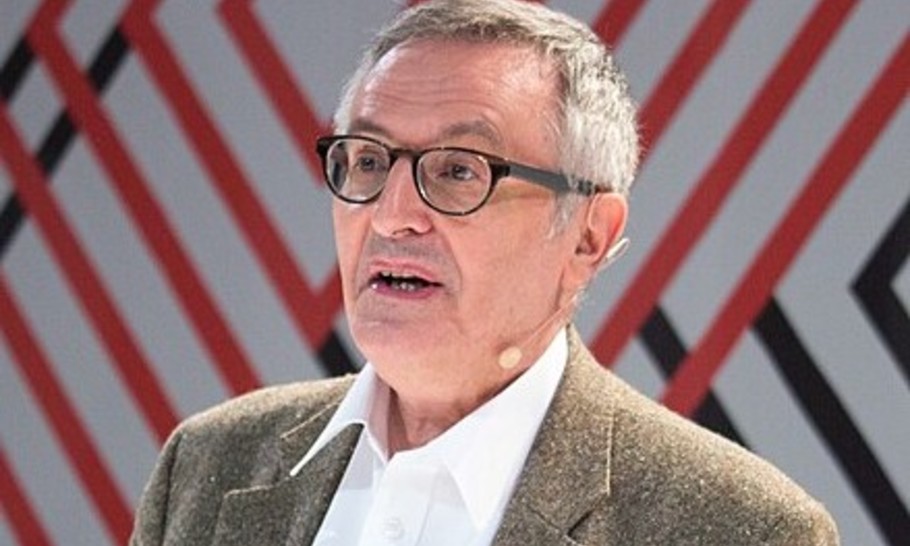
Gray in 2015
For more than twenty years, from 1976 to 1998, John Gray was a Fellow and Tutor in Politics at Jesus College, Oxford, before becoming Professor of Politics at Oxford and then Professor of European Thought at the LSE until his retirement from academic life in early 2008. During this period he wrote and edited some 25 books on political philosophy, from Mill to Hayek and Isaiah Berlin. Over the last two decades he has written another half dozen books and numerous articles. Particularly outstanding have been his essays for the New Statesman on writers from JG Ballard and Mick Herron to Shalamov and Jozef Czapski.
During Gray’s time at Oxford, a key figure for him was Isaiah Berlin. They may seem an unlikely couple. Berlin was one of the great public intellectuals of the post-war period, a formidable political philosopher and historian of ideas, a famous broadcaster and a prolific essayist. He was profoundly influenced by his encounters with such major Russian cultural figures as Shostakovich, Pasternak and, above all, Anna Akhmatova.
Gray, by contrast, was born into a working-class family in South Shields just after the war and began as a leading thinker on the New Right. It would be tempting but wrong to say that Berlin had the greater intellectual range because in addition to his academic writings, Gray has written major articles on thinkers from Fukuyama and Rawls to Adam Phillips, Freud (“The Last Great Enlightenment Thinker”) and James Lovelock.
Perhaps Gray’s most original contribution to current cultural and political debates is his critique of the delusions of liberalism. Last week he gave the Isaiah Berlin Lecture at the National Liberal Club on “Liberalism, Pluralism and the Sense of Realism.”
Unsurprisingly, Gray began his lecture with Berlin. Politics, he said, especially liberal politics, is not the pursuit of agreement but the pursuit of a modus vivendi. There are some differences which may seem intractable but can be moderated — for example, the differences between liberalism and populism, which lay at the heart of his lecture. Here he challenged his overwhelmingly liberal audience. “Populism,” he said, “is not the opposite of liberalism. It is the shadow of a certain kind of liberalism.”
It is no good, he said, for liberals to dismiss people who vote for Trump or Brexit as simply stupid — as “a basket of deplorables”, in Hillary Clinton’s infamous phrase. We can’t go back to a pre-Trump or pre-Brexit world. “That world,” said Gray, “is dead and gone. It’s irrevocably changed.”
And it’s changed in large part, Gray argued, because populism is not simply the opposite of liberalism. It is bound up closely with liberalism. It is a response to a certain kind of liberalism.
Liberals may argue that these new forces that are sweeping the world have nothing to do with their policies, but as Gray pointed out, populism is a response to, even a product of, the globalisation that was unleashed by liberal politicians — what Gray called “Hyper-Liberalism”. Post-war liberalism was over-optimistic. Progress was not linear. Liberals may wish that we could get beyond the present “culture wars”. But these culture wars are a kind of resistance to ways of life which many people simply do not recognize or want. They feel they are being despised and dismissed.
This brings us to Berlin’s writing on The Sense of Reality, the tragic vision in his particular kind of liberalism. Doing the right thing, Berlin thought, often means doing irreparable harm. Unleashing globalisation led to the prosperity of some in the 1980s and 1990s, but it also destroyed whole communities and whole industries, with inevitable consequences: in particular, a kind of anger and the politics of resentment.
In the discussion afterwards, a member of the audience, a former Professor of Political Thought and now a Lib Dem MP, picked up what he understood to be Gray’s central point, “the distrust between government and the public”. He missed Gray’s point. It’s not the distrust between government and the public: it’s the growing gulf between the people and the entire liberal political and cultural establishment, who simply don’t understand the anger they have unleashed.
Take a number of recent examples from British politics, all of which have dominated the headlines. First, the foolish decision of the Labour Government to appoint a senior policeman and a social worker to be candidates to chair the new inquiry into grooming gangs — or what we should properly call rape gangs. Any sensible person would know that the police and social workers in numerous British towns have been accused of betraying thousands of young girls, left at the mercy of these rape gangs. They are surely the last people you would trust with chairing such an inquiry.
Second, the issue of judges and immigration into Britain. Judges are surely the very beacon of propriety: learned, moderate, judicious and impartial. But recent judgments about illegal immigrants, some charged with serious sexual crimes, have provoked a tremendous backlash in parts of the media and many communities who feel they have had immigrants, legal or illegal, imposed upon them, causing serious risks to young girls.
Third, the media, especially BBC News, used to be widely respected, again for their intelligent analysis and impartiality. The BBC believe that licence-fee payers still believe this and run endless ads on the BBC News Channel saying how we can trust their news coverage.
Seriously? You don’t have to be Jewish to think that the BBC’s constant vilification of Israel and their bizarre infatuation with President Trump are deeply flawed. Their refusal to call Hamas “a terrorist organisation”, their acceptance of statistics and claims of “genocide” and “famine” from the Palestinian Health Authority in Gaza (i.e. Hamas), UN organisations, NGOs , doctors working in Gaza and Palestinian spokesmen in Gaza and abroad have damaged the Corporation’s reputation. Together they amount to the most biased coverage BBC News has ever produced of any major international conflict.
Fourth, the Royal Family: not so long ago, much revered and admired in most of Britain. Then came various scandals about Prince Andrew. But this quickly spread to contaminate other parts of the Monarchy. Where did all his money come from? Why should someone accused of being a sexual predator live for a peppercorn rent in a 30-room mansion? Why is he allowed to continue to be called a Prince but forced to give up much more minor titles? Why did the Palace not advise the King to change the date of his visit to the Vatican, rather than let it go ahead in the same week as the publication of the memoir of Andrew’s main alleged victim?
It’s not just the Government who are distrusted by the public. The whole liberal establishment is distrusted by the public, with predictable political consequences in next year’s local elections and the next General Election. People are expected to turn to populist parties, especially Reform, instead of the two main political parties who have shared government for the past century.
We are living through a political and cultural earthquake. And not just Britain. So is America and much of Europe. There are riots in Dublin; a former French president is now in prison; we are losing count of the number of French (or British) prime ministers in the last few years; Angela Merkel, once the predominant centrist politician in Europe, is widely blamed for Germany’s multiple crises. Populism is sweeping Europe and America.
This was the subject of John Gray’s lecture. I wonder what Isaiah Berlin and other key figures in the post-war liberal establishment would have made of his critique of their legacy.
A Message from TheArticle
We are the only publication that’s committed to covering every angle. We have an important contribution to make, one that’s needed now more than ever, and we need your help to continue publishing throughout these hard economic times. So please, make a donation.


