Cormac McCarthy: ‘The Horror! The Horror!’

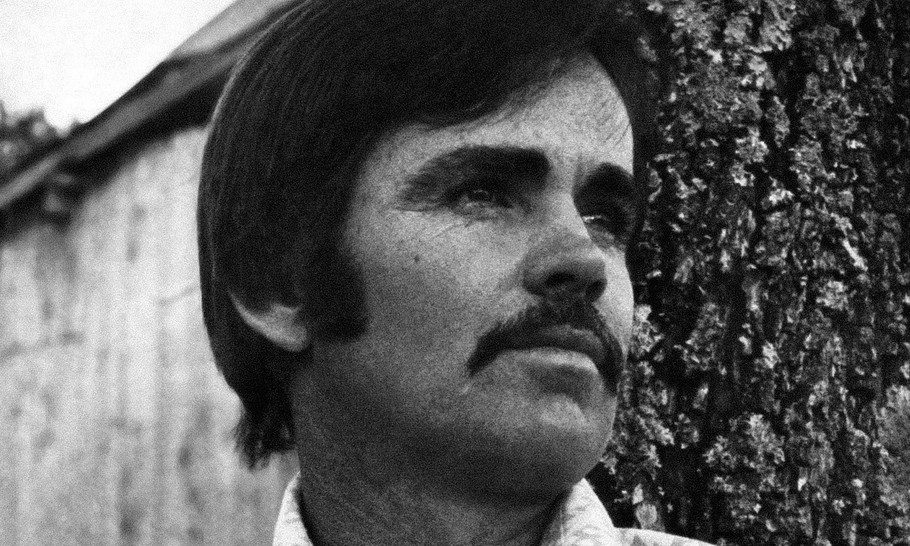
McCarthy in 1973
Cormac McCarthy (1933–2023) grew up in Knoxville, Tennessee, one of the ugliest industrial cities in America. He lamented, “there is something about the town that does indeed conjure up wretchedness, ennui and despair,” but frequently returned to his native habitat. His world view was always shadowed by apocalyptic disaster. In 1942, Oak Ridge, 20 miles west of the city, began to produce nuclear energy for the atomic bomb. The Manhattan Project in Los Alamos, where the bomb was developed and tested, was 35 miles northwest of Santa Fe, where Cormac died. He spoke of the “catastrophic consequences” of the atomic bomb, yet ignored the crucial advantages of its first cataclysm. The bomb finally ended the war that started when Japan attacked Pearl Harbor; it saved thousands of American and Japanese lives that would have been lost if Japan had sacrificially defended its home islands (Norman Mailer, William Styron and many others were grateful); it showed the danger of the bomb which, despite many threats, has not been used since then.
Cormac was slender, charming, broad-shouldered and handsome. Different sources measured him as just under six feet, 5 feet 7 inches, or just plain short. He changed his real name from Charles to the distinctive Gaelic equivalent Cormac to avoid the ludicrous connection with Edgar Bergen’s popular puppet Charlie McCarthy. He joined the Air Force in 1953, and in a rare comical incident military officials mistakenly sent his father a photo of a Black man that was supposed to be Cormac. His father tolerantly attributed the unusually dark complexion of his son to the power of the Texas sun. Cormac was sent to Alaska, loved the harsh climate of the tundra and landed a soft job as an announcer for the Armed Forces Radio Service. He heard that one airman had returned from a war to find he’d missed not only the birth of his daughter but also her conception.
He was macho and catnip to the ladies. An angry companion recalled that “Cormac was a hound. None of his friends’ wives was safe from him.” He once walked off with a congenial wife, and left everything except his boots and his typewriter—though their affair soon ended. Ill-suited to marriage, he had three wives at church-door, without other company before, in between and afterwards.
His first wife, Lee Holleman, came from rural Arkansas and was his classmate at the University of Tennessee, where he studied on the GI Bill. Their marriage began in 1961, and they had a son, Cullen, whom Cormac soon abandoned. They had moved unaccountably to Chicago, “the dead center of bohemia,” but Tracy Daugherty doesn’t explain what attracted them. The real bohemian centers were Greenwich Village in New York and North Beach in San Francisco. The newlyweds lived in cellars on unemployment and welfare money, on grants, awards and his wife’s modest salary. His biographer writes, “The McCarthys’ marriage had curdled from the start. The repetitive work hours, the indignity and grime of poverty, the constant close proximity, the competitive scramble for decreasing amounts of writing time made them hunker, defensively.” When Lee complained, “you act as if you want to be single again,” he laconically replied, “I guess that’s right.” After his marriage broke up, he was prone to shame and regret, to despondency, insomnia, alcoholism and dissipation.
Cormac’s second wife, whom he met on a ship to Europe and married in 1966, was a beautiful English ballerina, Anne DeLisle. She recalled, “he was such a rebel that he didn’t live the same kind of life anybody on earth lived,” and always refused offers to teach and lecture in college. “We lived in total poverty. We were bathing in the lake. Someone would call up and offer him $2,000 to come speak at a university about his books. He would tell them that everything he had to say was there on the page. So we would eat beans for another week.” When he left her, Anne desperately wrote, with a sexual promise: “My sweet love, I cannot live without you. I thought I was making you happy. Why didn’t you tell me how you felt? I wish I had you deep inside me now.” After his death she remembered, “I was in love with him. I still am.”
In 1976, the 43-year-old Cormac began a lifelong liaison with Augusta Britt, a petite 16-year-old with long blond hair, whom he met in Tucson, Arizona. She’d been beaten and traumatised in several foster homes, and had become a sexually experienced alcoholic. She carried a stolen Colt revolver, which he found irresistibly attractive, to protect herself from further assaults. Her essential shopping list at Safeway and Victoria’s Secret included “bread, cheese, whip and leather underwear.” Cormac told her, “I’m going to Mexico, and I want you to come with me. At least then you’ll be safe.” She agreed, he eventually moved on and she said, “I just never came back to him.” At the end of his life she sadly recalled, “He was living like a rich hillbilly, drinking again. Living in majestic splendor but enjoying none of it. Surrounded by junk and the clutter of a lifetime. Haunted.” Cormac could have been paternal rather than predatory. He certainly took advantage of the lonely teenaged girl and slept with her. But he rescued her from a disastrous life, protected her and financially supported her. Augusta eventually went to college and became a trained nurse.
In 1998 he married his third wife, Jennifer Winkley, who was eight months pregnant with the son they named John Francis. “He quickly grew impatient with the daily responsibilities of child rearing” and their marriage was in trouble. They divorced in 2006, he fell into “deep misery” and complained, “I have no one.” He left all his wives but they all remained in love with him. After their marriage ended Jennifer continued to take good care of him. He later “dated” the actress Penelope Cruz when she was filming his novel All the Pretty Horses. She probably talked about herself instead of adoring him and refused to sleep with him. He ungallantly remarked, “she bored the shit out of me.”
As a novelist, Cormac was extremely fortunate to secure the brilliant and unusually tolerant Random House editor Albert Erskine. But he did not “look like Gary Cooper” as Tracy Daugherty states in Cormac McCarthy: A Legacy (St Martin’s Press, 528pp, £30). He created Cormac’s career by pursuing him when he disappeared for weeks at a time and failed to answer letters when Erskine was fixing his first book, The Orchard Keeper (1963). Cormac made reading difficult by omitting apostrophes and quotation marks; Erskine provided valuable editorial advice that gave his novels some clarity and coherence. He sent chapters to magazines and to prominent authors, helped Cormac secure many grants, publicised his books and got unrealistic advances after poor sales.
Cormac made many pretentious and absurd statements in speech and fiction, which Daugherty solemnly quotes:
“As a boy I never left the house without a gun,” though his teachers would never have allowed this. His Air Force medical report, listing six accidental gunshot wounds, revealed that he was inept and reckless with guns.
“There was no hobby I didn’t have, name anything, no matter how esoteric, I had found it and dabbled in it.” Some of his characters seem to have been modeled on taxidermy.
“Urinal cakes in the men’s rooms smelled especially sweet to him.”
“French white wines can double as window cleaner.”
He disliked modern architecture but “thought Frank Lloyd Wright was a great architect.”
Hollow at the core, Cormac specialised in pseudo-profundity:
–“Masonry is older than fire.”
–“Three moves is as good as a fire.”
–“God speaks in stones and trees, the bones of things.”
–“Comedy and tragedy seemed the essence of Catholic thought.”
–“This night thy soul may be required of thee.”
–“The austerity of the desert where nothing is offered but everything is possible.”
–“What vision did you have that you sought the land’s spine here where the waters divide?”
–“Language has conditioned us to substitute our own creations for those of the world.”
–“We cannot appreciate the true nature of reality beyond the veil of the nominal.”
–“There is validation of sequence and causality as if each round and perfect hole owed its existence to the one before it there on the prairie.”
–“Torture was a form of moral inquiry. With these howls we hope to provoke the silence of the universe into its own betrayal.”
Cormac falsely claimed, “I ended up in the Southwest because I knew that nobody had ever written about it.” But his ignorant and self-serving statement obliterates D. H. Lawrence, who lived in New Mexico for two years in the early 1920s. Lawrence wrote St. Mawr (1925) and Mornings in Mexico (1927) as well as several stories and poems about the region. He said: “I think New Mexico was the greatest experience from the outside world that I have ever had. It certainly changed me forever.”
Daugherty doesn’t recognize some of Cormac’s rare literary allusions:
–“Of the telling there is no end.” – Ecclesiastes 12:12: “of making many books there is no end.”
–“I didn’t measure out my life in coffee spoons.” – T. S. Eliot, “The Love Song of J. Alfred Prufrock” (1916): “I measured out my life in coffee spoons.”
–Cormac’s “skull beneath the skin obsession.” – Eliot, “Whispers of Immortality” (1918): “Webster was much possessed by death / And saw the skull beneath the skin.”
–Cormac’s Cities of the Plain (1998) adopted the title of Marcel Proust’s Cities of the Plain (1922).
–Using the title of Ingmar Bergman’s film he wrote, “The Hour of the Wolf was the exact moment between night and dawn, usually around four A.M., when statistically most suicides take place.” – Scott Fitzgerald, “The Crack Up” (1936): “In a real dark night of the soul it is always three o’clock in the morning.”
“Cormac always preferred to write in bed, balancing his typewriter on a piece of wood in his lap,” and confessed, “I write to get the nightmare out of my head and into yours,” to challenge, disturb and violate his readers. His novels pile on the horrors, and morbidly describe mindless rapacity and cruelty: murder, blood, incest, rape, sodomy, cannibalism and necrophilia. A child’s throat is slashed; victims are scalped and castrated, and have their genitals stuffed into their mouths. In his endless series of degradations “the whole world is reduced to feces and vomit.” Only bestiality and coprophilia seem to be missing. In his post-apocalyptic novel The Road, “the world was an ash pit, the few survivors of some unnamed cataclysm hungry, desperate, nearly feral.” He liked the story of a man who tried to kill his girlfriend and buried her in the desert. She dug herself out of the premature grave, limped to a highway and flagged down a car.
Tracy Daugherty admits that the novels of the Border Trilogy – All the Pretty Horses (1992), The Crossing (1994) and Cities of the Plain (1998) — “were straightforward melodramas built around familiar Western tropes.” Influential critics have noted Cormac’s faults. James Wood called him “one of the great hams of American prose,” and agreed that the series of bloody murders by the pathological killer in No Country for Old Men (2005) “gestures not toward any recognizable reality but merely toward the narrative codes already established by pulp thrillers and action films.” Denis Donoghue argued that in the Border Trilogy, McCarthy’s imagination had failed him: “In the past he had been able to imagine anything, but he can’t bring himself to imagine the forms of civil life. He is not good with any lives that have entered upon communities, cultural interests, attended by customs, proprieties and laws.”
Cormac liked to complain about his dire poverty and maintained, “I’ve been a full-time professional writer for 23 years and I’ve never received a royalty check.” But he got unearned advances for all his books, benefited from a steady stream of patronage and was richly rewarded. His grant proposals seemed better than his novels and he won bounty beyond the dreams of avarice. He was successfully recommended for grants and awards by Saul Bellow, Robert Penn Warren, Ralph Ellison and John Hersey. He won Ingram-Merrill and Wallace Stegner fellowships; a Rockefeller Foundation grant of $5,000; two Guggenheim fellowships of $16,000; a Lyndhurst Foundation award of $60,000; a MacArthur “genius” grant of $236,000; and a Kennedy Center Fund for New American Plays of $10,000. His father often supplied him with thousands of dollars. He also got funds from the Santa Fe Institute, where he liked to question the high-powered scientists. He had a permanent office there, willingly did menial chores to keep busy, and brought in prestige and cash. By 1996 Cormac was earning $200,000 a year.
In 1974 he made a sudden transition from cult hero to famous author. His novels had sold only a few thousand hardcover copies. Fame came with the appearance of Vintage Contemporary paperback editions of Suttree (1979), which sold a spectacular 23,700, and Blood Meridian (1985), which sold 39,290. His new agent arranged a three-book deal for The Border Trilogy of $450,000. He sold his literary archive for $2 million to Texas State University at San Marcos, between Austin and San Antonio, and offloaded his Olivetti 22 typewriter to an American collector for $254,000. The self-styled recluse even appeared on the popular but profitable Oprah Winfrey television show.
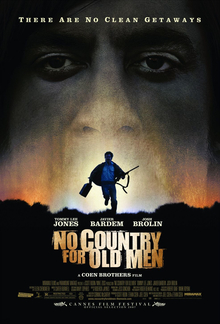
Many terrible films were made from his novels, and critics called his last screenplay “the worst movie ever made.” The only exception was No Country for Old Men, whose title came from William Butler Yeats’ “Sailing to Byzantium” (1926). Directed by the Coen brothers, with Javier Bardem as the villain, it won four Academy Awards. His last two novels, published to make money, were disastrous and should never have appeared. The multiple drafts crudely stapled together made no sense.
Tracy Dougherty’s biography Cormac McCarthy: A Legacy Revisited has no table of contents and long chapters with no titles, so the settings and dates remain vague throughout the book. His chaotic and confusing first chapter jumps around from novel to novel and mentions 27 books in the first ten pages. After Daugherty recovers from the first chapter, his thoroughly researched book corrects Cormac’s wildest boasts and fantasies, and lists all the frequent road trips taken by Tarmac McCarthy. The novelist was slowly killed by prostate cancer and by the radiation treatment for leukemia that “ended his life”.
Cormac admired Melville’s Moby-Dick (1851) and sometimes imitated William Faulkner’s bombastic style. But he was deliberately uncultured and took no interest in contemporary novels, poetry, art or music. He considered the theme of suicide in Suttree (1979), but didn’t mention the authoritative work on this subject, Albert Camus’ The Myth of Sisyphus (1942). He had no close writer friends, and liked to hang out with both low-life types and local scientists. He had a large library, and a huge collection of cars, trucks, guns and expensive cowboy boots. He liked to sit alone in his house in the middle of the night and shoot rats. Rarely have such an unattractive character and his sensational fiction been treated so sympathetically.
Jeffrey Meyers has recently published James Salter: Pilot, Screenwriter, Novelist and Parallel Lives: From Freud and Mann to Arbus and Plath (2024), Forty-Three Ways of Looking at Hemingway (2025) and The Biographer’s Quest (2026).
A Message from TheArticle
We are the only publication that’s committed to covering every angle. We have an important contribution to make, one that’s needed now more than ever, and we need your help to continue publishing throughout these hard economic times. So please, make a donation.


