‘Christian civilisation’: what’s the problem?


“Today the meaning of words is ever more fluid and the concepts they represent increasingly ambiguous,” Pope Leo told diplomats gathered in the Vatican on 9 January 2026. “Or rather in the contortions of semantic ambiguity, language is becoming more and more a weapon with which to deceive, strike, or offend opponents,” he continued. “ W e need words once again to express distinct and clear realities unequivocally”. But did they ever? Some of the Pope’s listeners must have wondered. Wasn’t ambiguity often useful when diplomats tried to reach mutually acceptable agreements? However, Leo was making a more general point, not only addressing diplomats.
To illustrate the Pope’s remarks, the words “Christian civilisation” are both fluid and ambiguous, and offensive when they came to prominence in Europe after the Second World War for still colonized peoples. European cities had been reduced to rubble, in many countries people were starving, and the horror of the Nazi death camps filmed for all to see. Among many others, some 2,500 Catholic priests from Czechoslovakia, Poland and Germany had been incarcerated in Dachau. “Christian civilisation” then referred to a shocking absence.
Christian humanitarianism, on the other hand, was an important presence. In his book Ruin and Renewal: Civilising Europe after the Second World War (Profile Books, 2020), the Professor of Modern History at Oxford Paul Betts provides a comprehensive account of the role humanitarian organisations played and the extraordinary work of Americans and UNRRA, the United Nations Relief and Rehabilitation Administration, the predecessor organisation to UNHCR and WHO.
Also set up in 1943, US Catholic Relief Services was one of the first to work in former enemy-controlled countries beginning in Italy and then in Germany, Czechoslovakia and Poland. Abbé Jean Rodhain, from Lorraine near the German border, set up the Vatican Mission with funding from the deputy Vatican Secretary-of-State Giuseppe Montini, the future Pope Paul VI.
Catholic relief workers focused on the French and American zones of occupation in Germany, with an additional special mission to the concentration camp at Bergen-Belsen in the British zone. Abbé Rodhain arrived within 24 hours of its liberation and pulled in teams from Germany. The saintly Abbé Charles Amarin-Brand is remembered caring for its victims, many dying of starvation and typhus, with particular concern for the children. The Quakers, disproportionately present, followed a similar policy towards suffering Germans, as did the majority Lutheran Church. In Britain the Catholic Women’s League found UK families who would take in children from formerly Nazi Austria.
Together these efforts represented a significant Christian — charitable — universalism, a forerunner of the later hope for a universal civilisation based on the concept of a shared humanity. In the words of Abbé Regnault from Belsen, there would be “no distinction between race or religion…since we are at the service of mankind”.
For many, “Christian civilisation” now defined post-Nazi Western Europe as it confronted Stalin’s brutal repression in Russia andEastern Europe. The sufferings of Cardinal Joséf Mindszenty in Budapest rallied Catholics behind his slogan (actually the motto of St Stephen, its first King), “Hungary is the Virgin Mary’s Country”. Mindszenty spent many years in captivity and was seen as a martyr for “Christian civilisation”. By 1951, from Liverpool to New York, prayers were said for the Cardinal and to ask God’sforgiveness for his persecutors.
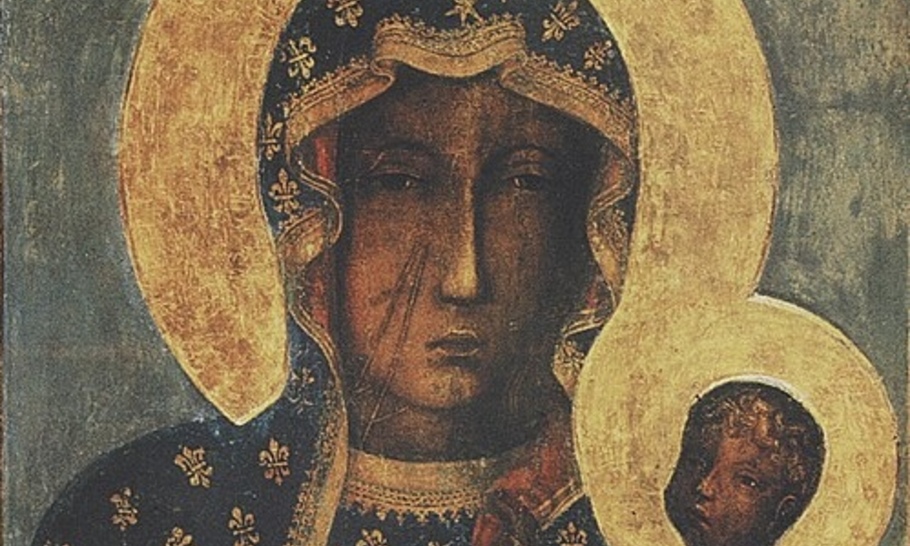
In the 1980s, Pope John Paul II, supporting the Polish national struggle, promoted devotion to Our Lady of Czestochowa. In both instances the challenge to Europe pitted respect for human rights and justice in the “Christian civilisation” of the West against the injustice of bureaucratic communism in the East.
The Christian basis of Christian democracy had been defined by the celebrated French Catholic philosopher Jacques Maritain, who sought a pluralist society based on an “integral Christian humanism”, that he called a New Christendom. De Gaulle appointed him French ambassador to the Vatican 1945-1948.
The theme of Christian civilization worked well in strenuous efforts to ensure Communist Parties did not win elections held in Western Europe. The Vatican, with CIA support, threw itself behind the Italian Christian Democrats, defeating the Communist Party by a wide margin in Italy’s 1946 general election. And in Germany it served as a national leitmotif in the success of the first Federal German Chancellor Konrad Adenauer’s Christian Democratic Union, which restored democracy in West Germany but hardened divisions with the Communist East.
The 19th century justification for colonialism, bringing Christian civilisation to benighted races but often rejected by the colonised as racism, had not disappeared. In apartheid South Africa, the National Party Prime Minister D.F. Malan asserted that white South Africans faced two irreconcilable ways of life: “barbarism and civilisation”, “heathenism and Christianity”. But the African National Congress (ANC) leader Albert Luthuli (1898-1967) was himself a Christian. For him, “civilisation is neither white, black or brown”: it was what UNESCO called “broad universal civilisation”.
Decolonisation in the 1960s washed the slogan of “Christian civilisation” into the gutters of history. It remains there today, thanks to Putin’s weaponising of the Patriarch Kirill’s brand of Russian Orthodoxy and Trump andhis coterie’s cosying up to fundamentalist forms of evangelical Christianity.
So, beyond the language of individual human rights, we are left with UNESCO’s insubstantial “broad universal civilisation” to support the rights of communities and nations. But the Catholic Church, with its body of social teaching, developed organically, can offer coherent meaning to the word“civilisation”: defining the attitudes, actions and relationships required to build a civilisation expressive of “love and genuine compassion”, with the family as its foundation, “the glue that holds the whole of civilisation together”. And, with the caveat ofSt. John Paul II, Francis, Leo and their predecessors, technology and science are a key part of civilisation “evaluated in the light of the centrality of the human person, the common good and the inner purpose of creation”. This is a dynamic vision, interpreted through the prism of integral human development, social, spiritual, cultural, economic and political relationships, and realised as a lifetime vocation.
Pope Benedict XVI, in his magisterial encyclical Caritas in Veritate of 2009, wrote: “ Reason, by itself, is capable of grasping the equality between men and of giving stability to their civic coexistence, but it cannot establish fraternity. This originates in a transcendent vocation from God the Father, who loved us first, teaching us through the Son what fraternal charity is.” It sounds abstract and academic. Much theological language does. But it speaks to the condition of Ukraine or Iran, Gaza or Sudan.
For often it is believers in perverse “contortions” of the Abrahamic faiths who are dropping the bombs. To establish a “Christian civilisation”, shining its light upon a hill, the settlers in America dispossessed and sometimes killed the original inhabitants, imported black slaves and until the 1960s denied their descendants civil rights. In Iran, where at least 16,500 are reported to have been murdered in the past few weeks and up to 300,000 injured, the BBC reports that families are paying $5,000 to retrieve the bodies of their loved ones. But those who massacred them also pray to a Merciful and Compassionate God.
Britain is a largely secular society. Benedict’s insights reveal how secular societies lack an element essential to building a broad universal civilisation in a divided world. Active Christians may now be only 9%, just possibly 12%, of the UK’s population. The BBC’s More of Less suggests there are no reliable statistics to confirm that the UK’s Christian community is growing, although a few churches are so full that there is standing room only on a Sunday. That leaves Church leaders in the UK with quite a responsibility. A challenge, certainly, but also a great opportunity to bring new meaning to the idea of civilisation.
A Message from TheArticle
We are the only publication that’s committed to covering every angle. We have an important contribution to make, one that’s needed now more than ever, and we need your help to continue publishing throughout these hard economic times. So please, make a donation.


