Richards Eales: the historian who understood chess


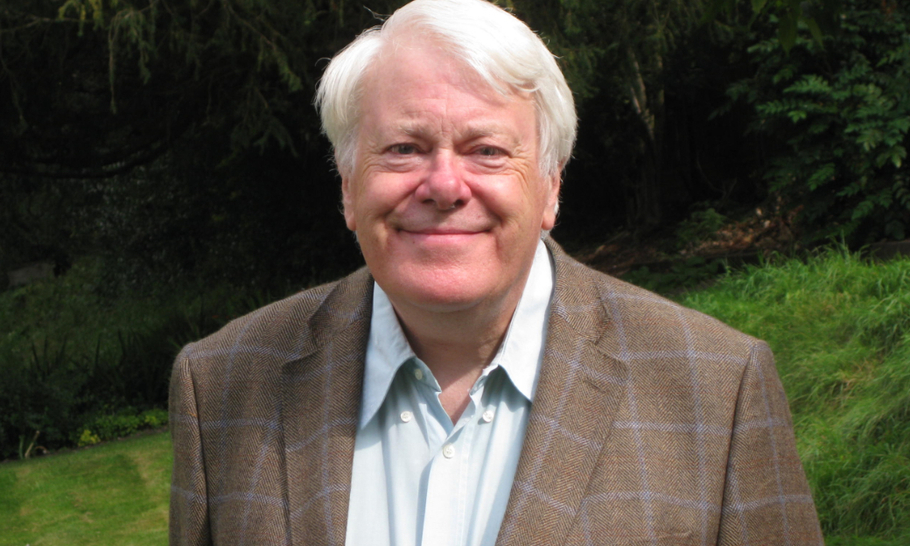
I have the sad duty to report the following in my capacity as one of the founder members of the Howard Staunton Society.
The Howard Staunton Society is deeply saddened by the sudden and totally unexpected death of Richard Eales, who died on 10 November 2026, just two days after his 77th birthday. Richard was a distinguished medievalist and one of the world’s leading chess historians, whose life brought together two of the great subjects of the Howard Staunton Society: the intellectual and cultural history of chess and the wider history of Britain.
For the Society, Richard was much more than an eminent scholar. He was a valued member and, at our 2025 revival dinner, an important contributor to the evening, delivering a memorable address on Howard Staunton and his profound intellectual and cultural significance. His presence brought an unusual depth of scholarship to an occasion devoted to celebrating Staunton’s place in British cultural history.
Richard Geoffrey Eales was born on 8 November 1949 in Grappenhall, Cheshire, and developed an exceptional talent for chess at an early age. He won the British Under-16 Championship in 1966 and British Under-21 Championship in 1969. He subsequently represented Christ’s College, Cambridge, in the annual Varsity Chess Matches against Oxford on three occasions between 1970 and 1972. He came equal second in the 1970 British Championship, was recognised as a FID É Master in 2002, and represented England in international matches, where he counted Alexander Beliavsky as one of his victims.
His achievements at the board were ultimately only one part of a remarkable intellectual career. Richard studied History at Cambridge University between 1968-74 and then lectured at the University of East Anglia (1974-76). He moved to a permanent post at the University of Kent in 1976, where he served as Head of History and retired in 2004. In retirement he taught for the History Department at Canterbury Christ Church University where my sister Jackie, Richard’s wife was a Professor of History. He was also a Fellow of the Society of Antiquaries, a leading member of the Castle Studies Group and a trustee of Canterbury Archaeological Trust.
His research centred on two main interests — castles, politics and the nobility in the Middle Ages, and the history of chess and other games — seeking to place both of them in their social and cultural contexts. His teaching encompassed subjects extending from the Norman Conquest and the Angevin Empire to the Wars of the Roses. His knowledge of the castles of Kent — including Canterbury, Rochester and Dover — became an important part of his contribution to medieval studies. He also travelled extensively to study historic fortifications in France and the Middle East, including sites in Syria and Lebanon which have since become inaccessible or seriously threatened.
Richard’s publications reflected this breadth of scholarship. Among them were an Introduction to the Alecto Press Facsimile edition of Domesday Kent (1992), and his contributions to Canterbury and the Norman Conquest 1066-1109 , which he edited with Richard Sharpe (1995) and Family and Dynasty in Late Medieval England , which he edited with Shaun Tyas (2003).
He enjoyed talking to local history societies in Canterbury and Kent and at conferences across the UK as well as in Ireland, Denmark, France, Germany and Poland. He was a contributor to the prestigious Chateau Gaillard Actes du Colloque and to the International Board Games Studies . He was also the author of the English Heritage Guide to Peveril Castle.

Richard lecturing in 2018 on a field trip for the Canterbury Medieval History Weekend.
Yet, to us, Richard’s contribution to chess history may ultimately prove to be his most widely remembered legacy. In 1985, he published Chess: The History of a Game (B. T. Batsford and reprints), a work which attempted something extraordinarily ambitious: to tell the story of chess from its origins in the East, through its medieval development and Renaissance transformation, to the emergence of modern international chess. Richard was particularly interested not merely in moves, openings and champions, but in why people played chess, who played it, and how the social meaning of the game changed.
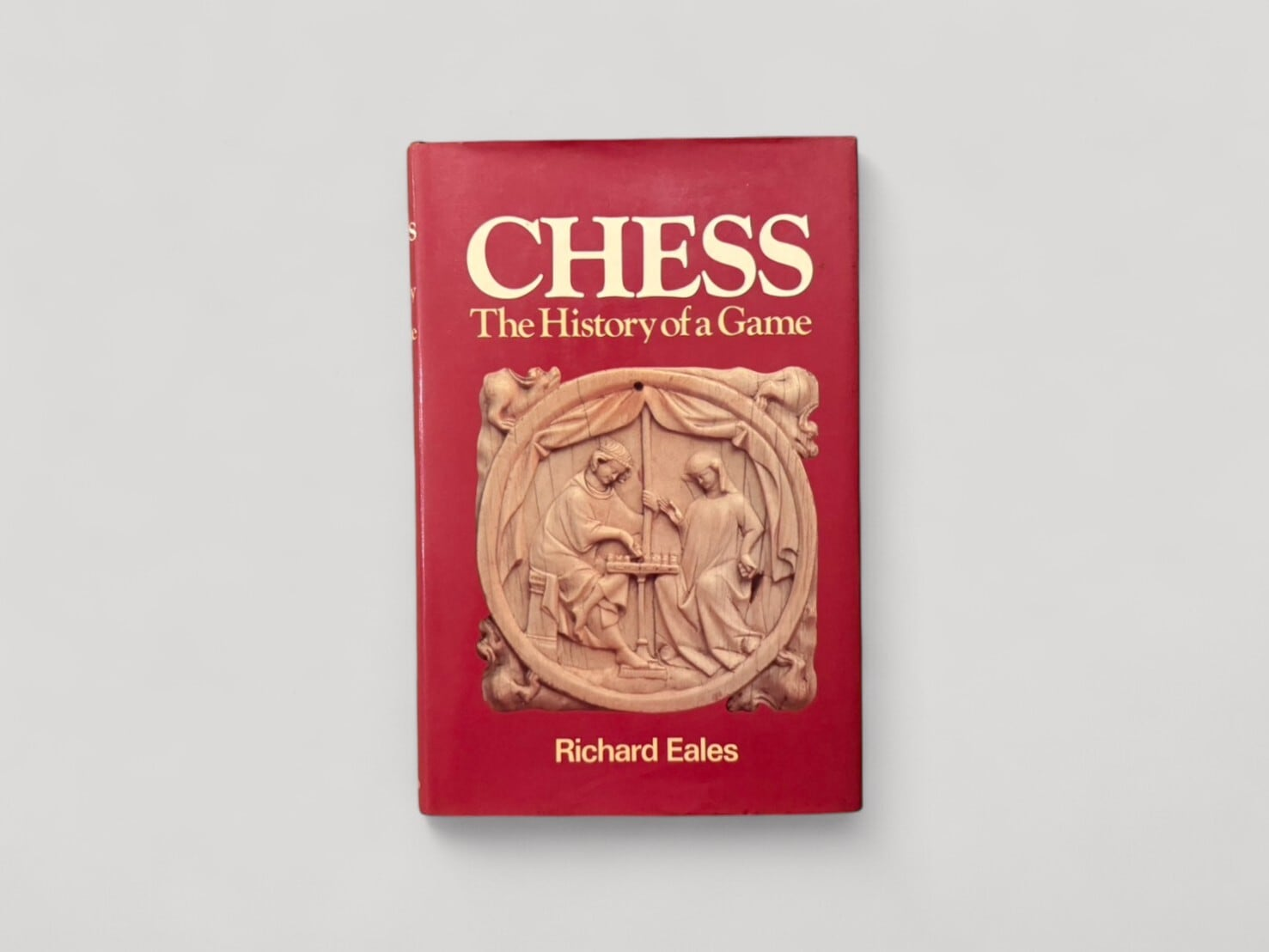
Richard’s classic book, Chess: The History of a Game
His treatment of chess therefore placed the game within the broader historical context of society and culture. The importance of that approach has been recognised by later chess historians. His research into the social ethos of chess — alongside its technical development and great personalities — continues to be cited in serious scholarship on the history of the game. Chess: The History of a Game has become a classic of chess literature.
Richard had also written about chess much earlier. His 1973 work Alekhine’s Defence (B. T. Batsford) was one of his first published contributions to chess literature, demonstrating the combination of chess expertise and scholarly discipline that would characterise his later work. His win against Povah with this favourite weapon is included in this tribute. Richard also wrote the definitive history of Cambridge University chess, a volume that I particularly relished, since it contains so many of my wins against, among others , representatives of Oxford University .
There was, therefore, a remarkable symmetry to Richard’s life. He was simultaneously a historian who understood chess and a chess player who understood history. He could approach the game as a player, but also as a historian asking what chess tells us about the societies that created, played and transformed it. That perspective made him a particularly fitting member of the Howard Staunton Society.
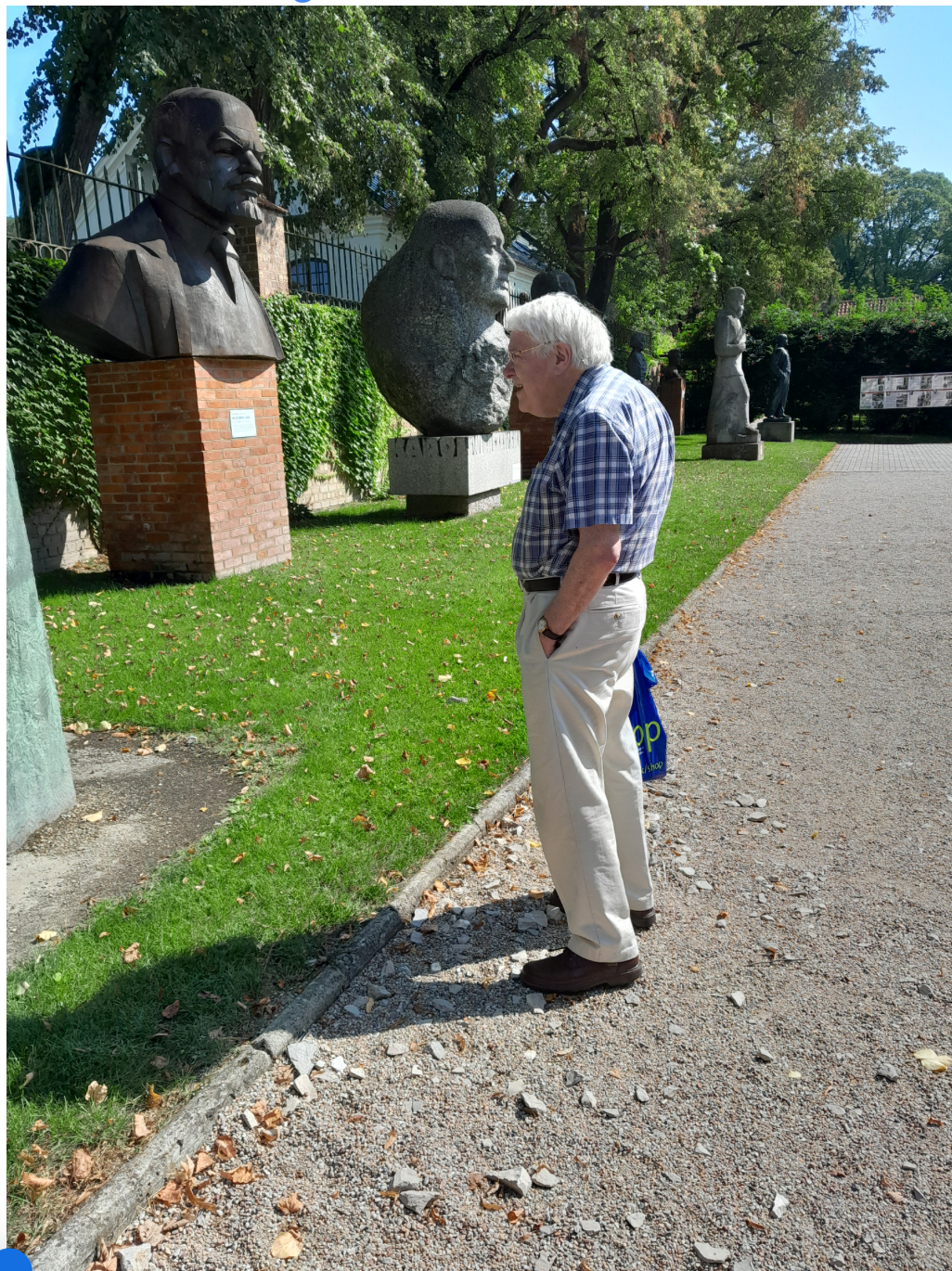
Richard contemplating Socialist Realism Art at the Zamoyski Palace in Kozłówka, Poland 2024.
Howard Staunton himself stood at precisely that intersection: chess player, writer, intellectual, public figure and cultural commentator. Richard understood that Staunton’s importance extended far beyond the moves of the games he played. He understood chess as part of Britain’s intellectual and cultural history — and it was this wider perspective that made his contribution to the Society so valuable.
Richard’s involvement with the chess world was also a deeply personal one. As Jackie Keene, his wife played for the English Girls Chess Team as a junior. Richard was therefore not only a colleague and fellow historian within the Society’s wider intellectual circle, but also part of a family with an extraordinary connection to British chess.
The loss of Richard will be felt particularly keenly by those who knew him as a scholar and colleague. A recent tribute from the Castle Studies Trust described him as a leading British castellologist and expert on the history of chess, remembering him as someone who was “always good company”, able to communicate complex arguments with exceptional clarity, and — perhaps most importantly — kind and generous to fellow academics. Those qualities are worth remembering. Scholarship is not only measured in books and lectures, but also in the generosity with which knowledge is shared and in the encouragement given to others. Richard Eales brought both qualities to his work.
The Howard Staunton Society extends its deepest condolences to Professor Jackie Eales, to Richard’s family, friends, colleagues, and former students, and to all those in the worlds of medieval history, castle studies, and chess, who knew and admired him.
Richard’s contribution to chess history, medieval scholarship and the understanding of Britain’s cultural heritage is a lasting one. His memory will also remain part of the story of the Howard Staunton Society, whose members were privileged to hear his scholarship and share his company.
Richard is survived by his wife Jackie — also a distinguished historian — his sister Elizabeth, his son Robert and his step-children, Alastair and Katie, his nieces Marina and Zoe, nephew Alexander, as well as his many grandchildren.
In the two following games, Eales first essays the highly expansive Austrian Attack against the solid Pirc Defence offered up by the ever-dependable FM John Littlewood. In the second outing, he plays one of his signature opening, the ever-speculative Alekhine’s Defence against the strong IM and correspondence GM, Nigel Povah.
Richard was Eales vs. John Littlewood
Chester vs Liverpool, 1967, England
1. e4 d6 2. d4 Nf6 3. Nc3 g6 4. f4 Bg7 5. Nf3 O-O 6. e5 Nfd7 7. h4 c5 8. h5 cxd4 9. hxg6 hxg6?
This move order inaccuracy has a significant impact on the game outcome, handing a dangerous initiative to White. Black could maintain equality with the long but forcing line 9… dxc3 10. gxf7+ Rxf7 11. Bc4 e6 12. Ng5 Nxe5 13. Qh5 h6 14. fxe5 hxg5 15. Qh7+ Kf8 16. Qh8+ Bxh8 17. Rxh8+ Kg7 18. Rxd8 Nc6 19. Rxd6 Nxe5, after which chances are even.

10. Qxd4 dxe5??
This further error already puts the game beyond Black’s reach. After 10… Nc6 11. Qf2 dxe5 12. Qh4 Nf6 13. fxe5 Nh5 14. g4 Nxe5 15. Nxe5 Qc7, Black is still just about hanging on.
11. fxe5 e6?
But this further error puts the game beyond Black’s reach. Both 11… Nf6 and Re8 are better.
12. Bg5 Nc6?
Black is now witness to his own demolition. Correct was 12… Nxe5 13. Qh4 Nxf3+ 14. gxf3 f6 15. Bd3 Rf7 16. Qh7+ Kf8 17. Bh6 Bxh6.
13. Qh4 f6 14. exf6?
The final nail. Prosaically 14. Qh7+ Kf7 15. Bxf6 Nxf6 16. Ng5+ Ke8 17. Qxg6+ Kd7 18. O-O-O+ Kc7 19. Qxg7+ offered better chances.
14… Nxf6 15. Bd3 Kf7 16. O-O-O Rh8 17. Qg3 Rxh1 18. Bxg6+ Kxg6 19. Bh6+ Kxh6 20. Rxh1+ Nh5 21. Rxh5+ Kxh5 22. Qxg7 e5 23. g4+ Black resigns 1-0
Mate follows: 23… Bxg4 24. Qh7#
England, 1978
1. e4 Nf6 2. e5 Nd5 3. c4 Nb6 4. c5 Nd5 5. Bc4 e6 6. Nc3 Nxc3 7. dxc3 Qh4
Not the novel move as suggested by Steve Giddens, although it may well have been new to Povah. White had won in Nezhmetdinov-Mikenas, Kazan, 1948, where the game deviated from our source 9. g3, with 9. Nh3.
8. Qe2 Bxc5 9. g3?!
The engine prefers 9. Nf3 Qe7 10. b4 Bb6 11. O-O d5 12. Bd3 c5 13. a4 c4 14. Bc2 with complete equality.
9… Qe7 10. Qg4?!
Stronger is 10. b4 Bb6 11. Nf3 a5 12. b5 d6 13. O-O keeping the game level.
10… Qf8 11. Nf3 Nc6 12. b4
This would seem to have been the novelty, a later draw in Wedberg-Bengtsson, Boras, 1979, preferring 12. O-O.
12… f5?!
Black relinquishes his modest advantage, which he can keep with 12… Be7 13. O-O f5 14. exf6 Bxf6 15. Bd3 d5 16. b5 e5 17. Qh5+ g6 18. Bxg6+ hxg6 19. Qxg6+ Qf7.
13. Qh5+ g6 14. Qh3 Bxb4?!

A bold try that unfortunately hands the initiative to his opponent. After 14… Be7 15. Bh6 Qg8 16. g4 fxg4 17. Qxg4 Bf8 18. Bg5 Bg7 19. O-O-O Qf7, there is complete parity.
15. cxb4 Qxb4+ 16. Nd2 Nxe5 17. Be2 b6 18. Rb1 Qd6 19. Qg2 Rb8 20. O-O Bb7 21. Qh3?!
White should continue 21. Nf3 Qe7 22. Rb3 O-O 23. Re1 Bd5 24. Re3 Ng4 25. Ra3 when he can retain his small edge.
21… O-O 22. f4 Qd4+ 23. Rf2 Qd5 24. Nf3?
Correct is 24. Bf3 Nxf3+ 25. Nxf3 Qd1+ 26. Rf1 Qc2 27. Rb3 maintaining his advantage.
24… Ng4 25. Rf1??

Disastrous and futile in equal measure as White must lose one of the rooks in an exchange. It is essential that White activates his passive pieces with, for example, 25. Bb2 Qxa2 26. Rff1 Rf7 27. Rfc1 Be4 28. Qf1 Bxb1 29. Rxb1, leaving White worse, but still in the game.
25… Qc5+ 26. Kg2 Qc2 27. Rb2 Bxf3+ White resigns 0-1
White dubiously saves the exchange as planned, but at the cost of his extra piece. His queen has been swept to the sidelines and he is four pawns down, two passed and connected.
Ray’s 212th book, “Fifty Years a Grandmaster”, can now be ordered directly from the publishers Filament Publishing through Chris Day on +44(0)2086882598 or Chris@filamentpublishing.com
The ISBN is 978-1-918453-53-9. The book contains wins by Ray against Mikhail Botvinnik, Svetozar Gligoric, Jan Timman, Tony Miles, John Nunn , Jonathan Penrose and many others.
A Message from TheArticle
We are the only publication that’s committed to covering every angle. We have an important contribution to make, one that’s needed now more than ever, and we need your help to continue publishing throughout these hard economic times. So please, make a donation.


