Damned to fame: the Nobel Prize for Literature

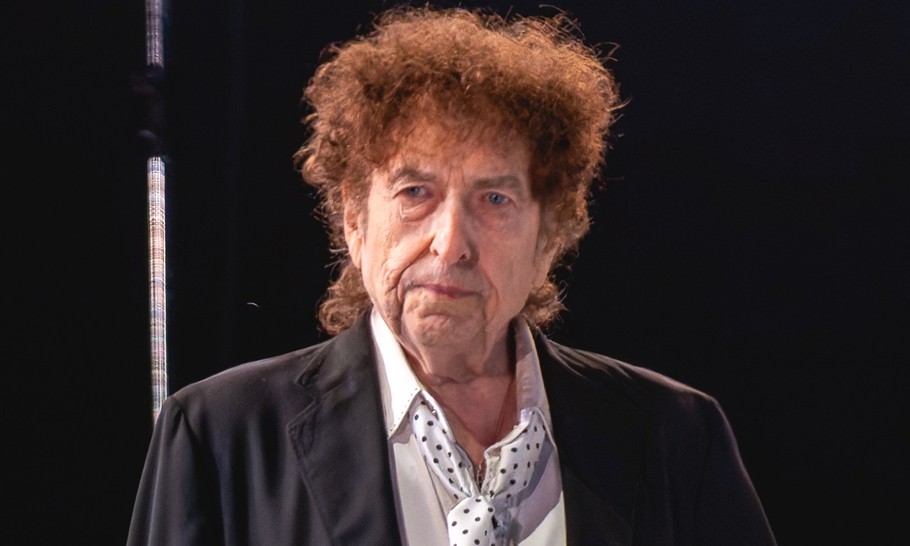
Bob Dylan - Nowlan Park, Kilkenny - Sunday 14th July 2019
On October 9th this year, the Nobel Prize for Literature was awarded to the Hungarian novelist Laszlo Krasznahorkai, passing over much more famous writers, such as Salman Rushdie, Thomas Pynchon or Michel Houellebecq. While he may be a worthy winner, Krasznahorkai is not even the best-known living Hungarian novelist; that is Peter Nadas.
Often blind to real distinction, hostile to innovation and insensitive to genius, strongly influenced by the recipient’s country and politics, race and gender, imprisonment and terminal illness, the Swedish Academy has frequently ignored literary greatness and awarded the prize to mediocrities. In the early years many prizes had been awarded to obscure Nordics, but not to the sacred monsters of the frozen north, Henrik Ibsen or August Strindberg, who had defied and criticised society. Most great authors—from Tolstoy, Henry James and Conrad, through Proust, Joyce and Kafka, to Anna Akhmatova, Nabokov and Auden—never won.
In 1997 the Italian performance artist Dario Fo was a bold but foolish choice. But the criminals and crazies, the rebels and extremists in ideas and behaviour, have had absolutely no chance of winning. Social pressure to reward female and Black writers sent it to Toni Morrison in 1993 instead of to Norman Mailer, William Styron or Philip Roth. Even genuinely distinguished authors like Albert Camus wondered “why me?” instead of André Malraux. For some unworthy writers it was more of an embarrassment than a reward.
T.S. Eliot, who believed the prize was more of an epitaph than an honour, declared, “The Nobel is a ticket to one’s funeral. No one has ever done anything after he got it.” But all serious writers dream of winning, and enlist powerful literary and political allies to secure the glittering prize, now worth more than one million dollars. But the honour hasn’t been all applause, rituals, ceremonies, banquets, money and fame. The influential award has sometimes provoked a surprising number of dramatic controversies reported throughout the world.
Hemingway, who won it in October 1954, was still in bad shape after two African plane crashes in January. Like Boris Pasternak and Alexander Solzhenitsyn, Jean-Paul Sartre, Samuel Beckett and Bob Dylan, he did not go to Stockholm for the ceremony. Instead, he received the award in Havana from the Swedish ambassador to Cuba and gave his gold medal to the shrine of the Virgen del Cobre.
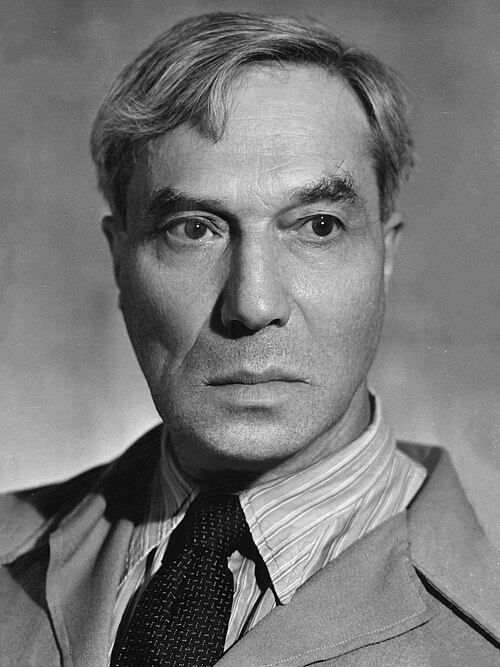
Pasternak in 1959
###
In 1957 Pasternak’s novel Doctor Zhivago was secretly copied, smuggled out of Russia, published in Italy and translated into many languages. The Soviet government condemned its negative portrayal of the Bolshevik Revolution, indifference to Socialist causes and sympathy with the Orthodox Church. On October 23, 1958 the Swedish Academy defied the Russian government and awarded Pasternak the Nobel Prize. It proclaimed, with its usual flatulence, that it was given “for his significant contribution to modern lyric poetry, as well as to the great traditions of the Russian prose-writers”.
Ronald Hingley writes that Pasternak was immediately informed by his government that since his work had damaged Soviet prestige, “he would have to repudiate both the prize and the novel”. Doctor Zhivago was condemned as “an artistically poverty-stricken and malicious work full of hatred of Socialism”. Pasternak was absurdly “denounced as having been a secret enemy of the State for the last forty years”, and his lover Olga Ivinskaya lost all her translation contracts.
Threatened with expulsion from Russia, Pasternak confessed, “No matter how badly the Soviet Union might treat him, he passionately desired to remain a Soviet resident.” On October 28, he caved in to the overwhelming pressure and sent a subtle telegram to the Swedish Academy: “In view of the meaning given to your award by the society to which I belong I must renounce this undeserved distinction. Please do not take my voluntary renunciation amiss.”
Deeply depressed, Pasternak suggested to Olga that they should both commit suicide, but she managed to talk him out of it. But merely rejecting the prize was not enough to satisfy the authorities. He also had to humiliate himself and “to express some kind of public contrition.” He assumed the correct cringe and dutifully wrote the required letter, but “the pleading tone was still not satisfactorily abject”. The orgy of hatred and degradation lasted for two weeks, from October 23 to November 6, 1958, until he was completely crushed. Pasternak’s disastrous gift was like Cassandra’s prophecy and Pandora’s box.
###
In 1965 the Nobel Committee gave the prize to the Russian novelist and dreary Party hack Mikhail Sholokhov, and praised his tetralogy And Quiet Flows the Don (1925-40) for its “artistic force and integrity.” Michael Scammell notes that “the award to Sholokhov was seen as a sop to the Soviet government to make up for the earlier Pasternak scandal.” But this prize caused yet another great scandal.
Sholokhov’s biographer Brian Boeck writes that “one of Sholokhov’s first editors became highly skeptical of his rapid metamorphosis from an apprentice into a virtuoso. He doubted that astonishing prose could emanate from the pen of the same young author whose short story he had laboriously edited just three years earlier.” In 1929 the editorial board of Pravda publicly exonerated Sholokhov and pronounced the accusations of plagiarism to be “malicious slander being spread by enemies of the proletarian dictatorship.” When Stalin, who lived until 1953, declared Sholokhov to be “the great writer of our time”, it became extremely dangerous to doubt the novel’s authenticity. The Soviet officials, who could not attack their hero, rejected the damaging evidence and the novel became the best-selling book in Russia. Soviet textbooks praised it as a supreme literary achievement and it was widely read in Soviet schools.
The controversy provoked a bare-knuckle fight among prominent Russian writers. In 1967 the poet Andrei Voznesensky, noting all of Sholokhov’s inferior work, publicly denounced him: “You, superclassic and henchman, / You ought to be ashamed; / You once copied another man’s novel, / But you couldn’t repeat the performance.” Two years later Sholokhov condemned Solzhenitsyn as a botanical pest, a “Colorado beetle” who ought to be exterminated. On September 16, 1974, Time magazine reported that Solzhenitsyn had revived the accusation of plagiarism. He declared that the real author of Sholokhov’s story of Cossacks in the Great War and the Russian civil war was Fyodor Kryukov. Solzhenitsyn argued that Sholokhov had secretly obtained Kryukov’s manuscript and passed it off as his own. Since Kryukov had been an anti-Soviet, White-Russian officer in the civil war, Sholokhov had to insert pro-Soviet passages and add Bolshevik heroes to the novel. This explained the unevenness of the work and difference from his other fiction. These revelations severely damaged Sholokhov’s reputation abroad, but he was awarded six Orders of Lenin, the last, four years before his death, in 1980.
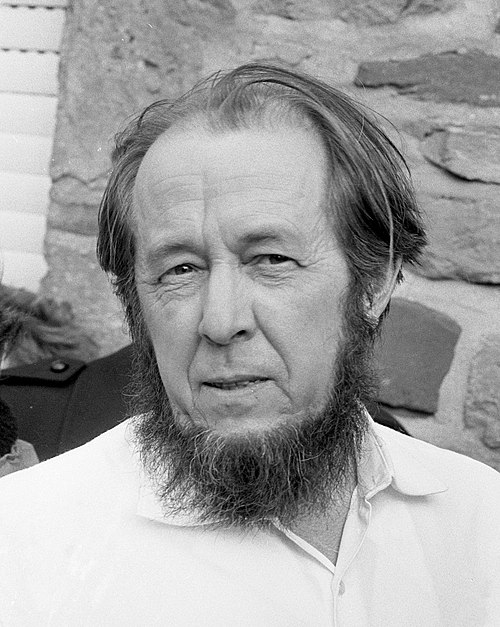
Solzhenitsyn in 1974
###
The prizes given to Pasternak and Solzhenitsyn had a political as well as a literary impact. The very qualities valued by western critics were viewed as hostile by the Soviets. Both men were threatened with exile and became victims of Soviet oppression. But unlike the fearful Pasternak, Solzhenitsyn had a forceful, defiant and aggressive character. He had fought the Germans in World War Two, had survived near-fatal cancer and had endured eight years in the Gulag Archipelago. He was much younger and tougher than Pasternak. Solzhenitsyn’s biographer Michael Scammell observes that “he was disappointed by Pasternak’s meek acceptance of the abuse hurled at him and his rejection of the prize. If he won the prize he would accept it, go to Stockholm, and make a fighting speech, even if it meant never returning to the Soviet Union, for he could then publish everything he wanted.”
After a Soviet delegation went to Stockholm but failed to block the prize, it was awarded to Solzhenitsyn in 1970 “for the ethical force with which he has pursued the indispensable traditions of Russian literature.” He triumphantly declared, with a proviso, “I am grateful for the award. I accept the prize. I intend to come and receive it on the traditional day insofar as this depends on me.” To prevent the Soviets from stressing his treatment for cancer and claiming he was too ill to travel, he emphasised that “I am well. The state of my health is no obstacle to my making the trip.” Scammell notes that “his self-control was absolute, and his prompt and firm acceptance was designed to underline the fact that there would be no repeat of the Pasternak fiasco.”
The leading Soviet newspapers, Izvestia and Pravda, immediately “denounced Solzhenitsyn as the darling of ‘reactionary circles in the West,’ accused him of illegally sending his works abroad, and also criticised the Swedish Academy” for honouring a rotten writer. Defying the authorities and to avoid the risk of exile, Solzhenitsyn tried to arrange the Nobel ceremony in the Swedish embassy in Moscow. But the Swedish ambassador to Russia hoped to succeed U Thant as UN Secretary-General. He refused to offend a country that had veto power and would not agree to this provocative arrangement.
Despite his courageous resolutions, Solzhenitsyn was forced to cave in and abandon his plans for Stockholm. His reasons were the difficulties of obtaining a Soviet passport, his distaste for the formal ceremonies and his very real fear that he would not be allowed to return to Russia. This fear was realised in January 1974 when he was deported from the Soviet Union. He finally accepted the award and prize money on December 10, 1974.
###
Pasternak and Solzhenitsyn wanted to go to Stockholm but could not leave Russia. Sartre and Beckett were free to travel but refused to go. Sartre, like Samuel Beckett, did not meet Alfred Nobel’s requirement for moral uplift and a “work of an idealist tendency”. But he was awarded the Nobel in 1964 “for his work, which, in the spirit of freedom and in the name of truth, has had a great impact on our era”. The motives of the writer who, for the first and only time, refused the prize were paradoxical and enigmatic. When he rejected the Nobel, a French newspaper wittily announced: “Double for Jean-Paul Sartre. 1. He Gets the Nobel 2. He Refuses to Accept It.” Annie Cohen-Solal writes, “It was as if a rejected Nobel were worth more than an accepted Nobel, and, retrospectively, humbly justified all Sartre’s mistakes, all his excesses.”
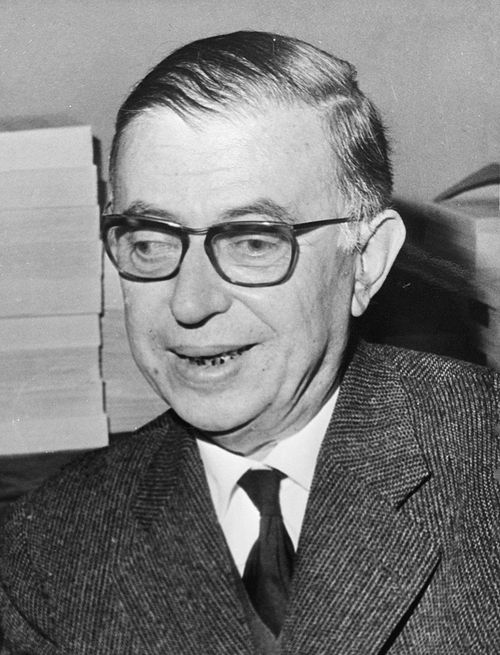
Sartre in 1965
The novelist François Mauriac provocatively noted the problems of the dress code and the sensitivity of Sartre’s lover, also a major novelist: “Coat and tails do not suit him and one must dress up to receive the prize. He also wants to avoid making Simone de Beauvoir jealous.” Some critics maintained that he’d refused the prize to get more publicity, and had been annoyed that in 1957 the younger Albert Camus had gotten it before him. After Sartre’s apparently rude and unprecedented refusal, the Swedish Academy withheld prizes from French writers until Claude Simon won it in 1985. The Academy interpreted Sartre’s gesture, which was not meant to be offensive or scandalous, as an insult. André Malraux, who certainly deserved it, may have been denied the prize because of Sartre’s refusal, as well as by his own Gaullist politics.
Instead of using influential friends to get him the prize, Sartre tried to persuade the Swedes not to give it to him. When he heard that he might win, he immediately told the committee that he would not accept it, asked them to take back the honor and keep it a secret. An experienced political operator, Sartre disingenuously claimed, “I was not aware that the Nobel Prize is awarded without asking the recipient’s opinion, and I thought I still had time to avoid it.” He had previously refused the Legion d’honneur and a chair at the Collège de France, and added more convincingly “I have always declined official distinctions.”
Sartre believed “the writer must refuse to let himself be transformed by institutions, even if these are of the most honorable kind”. But—and here’s the crucial reason—he thought the award was politically biased against the Left: “Today, the Nobel Prize appears to be a distinction reserved to writers of the Western bloc and rebels of the Eastern bloc.” He felt he had to maintain “the solitude of the revolutionary writer”. Proud of being an outsider, he rejected the values of bourgeois society and its leaders. Cohen-Solal concludes that “in an evasive gesture of freedom and pride, Sartre had refused to be embalmed alive, to be made into a living statue and prematurely canonized.” (My professorial friend Denis Donoghue, using the same strategy and making il gran rifiuto, greatly enhanced his reputation and prestige by leaving King’s College, Cambridge, after a year and refusing an offer from Harvard.)
###
On October 5, 1969, Samuel Beckett, who hated publicity, flew from a theatrical rehearsal in Frankfurt to Tunis in North Africa. On October 23, his French publisher Jérôme Lindon told him, “In spite of everything, they have given you the Nobel Prize—I advise you to go into hiding.” His biographer James Knowlson writes that Beckett considered it a catastrophe: “He saw only too clearly how much his long-term future would be disrupted by the celebrity, in addition to his present peace being shattered.” After some hard bargaining, the Academy, wary of another refusal, agreed that he did not have to make a speech and—letting him off the hook— that “his presence in Stockholm, although eminently desirable, was by no means a condition of his acceptance of the Nobel Prize.”
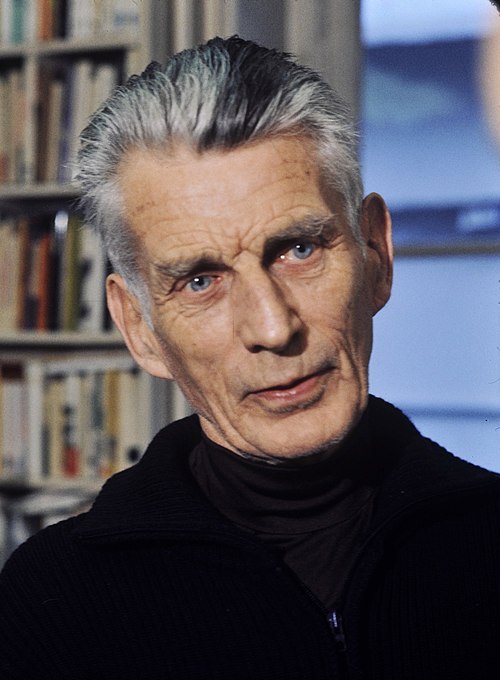
Beckett photographed in 1977
Beckett agreed with his publisher and went into hiding until the chaos died down.
But this made some journalists even more eager to track down the elusive quarry. To escape for a regenerative Mediterranean swim, he secretly crept down a back staircase of the hotel to find a distant and deserted beach. Paradoxically, though he’d refused to go to Stockholm, “the governor of Tunis invited ten couples to a reception in his honour and he felt it would have been very rude to refuse to attend.”
In Stockholm, Lindon as stand-in fulfilled Beckett’s obligations, received the diploma from the king and attended the official dinner with the Irish ambassador to Sweden. As if to dissociate himself from the prize, Beckett anonymously gave away the £30,000 ($45,000) prize money to his old university, Trinity College, Dublin, and to many worthy but impoverished writers, directors and painters. He accepted because he did not wish, like Sartre, to be publicly discourteous. Beckett felt the prize actually damaged his self-respect and the values he expressed in his work. In an unusual mixture of humility and pride, he could not reject a high-level acknowledgement of his lifetime achievement.
###
Bob Dylan’s 2016 prize, the first time it had been given to a songwriter and musician, also sparked controversy. Many authors felt it debased the honour. The Scottish novelist Irvine Welsh furiously attacked the committee: “I’m a Dylan fan, but this is an ill-conceived nostalgia award wrenched from the rancid prostates of senile, gibbering hippies.” Others thought Dylan’s songs were genuine poetry and felt that his popularity, not his work, provoked the complaints. The Canadian songwriter Leonard Cohen defended Dylan and said that giving him the prize was “like pinning a medal on Mount Everest for being the highest mountain.” The Norwegian writer Karl Ove Knausgard was very divided and said, “I love that the Nobel committee opens up for other kinds of literature – lyrics and so on. I think that’s brilliant. But knowing that Dylan is the same generation as Thomas Pynchon, Philip Roth and Cormac McCarthy, makes it very difficult for me to accept their decision.”
The controversy continued when several critics found that Dylan’s Nobel lecture closely resembled the description of Moby-Dick in the introductory guide Sparknotes. The two texts contained more than 20 “identical phrases and similar phrasing, but no verbatim sentences”. The New York Times reported that Dylan often plagiarised other works and claimed that borrowing material was “a rich and enriching tradition” in folk music. Unlike Sartre, Dylan did not turn down the Nobel Prize. But in a perverse twist of the reactions of Pasternak and Solzhenitsyn, Sartre and Beckett, Dylan, “due to pre-existing commitments”, couldn’t be bothered to write an original speech or meet the king. His songs had opposed the American government and its military policies, and he felt conflicted by given a prize for being a troublemaker.
Jeffrey Meyers published James Salter: Pilot, Screenwriter, Novelist and Parallel Lives: From Freud and Mann to Arbus and Plath last year. Forty-Three Ways of Looking at Hemingway will appear in November, The Biographer’s Quest in April 2026.
A Message from TheArticle
We are the only publication that’s committed to covering every angle. We have an important contribution to make, one that’s needed now more than ever, and we need your help to continue publishing throughout these hard economic times. So please, make a donation.


