In praise of the BBC’s TV archive


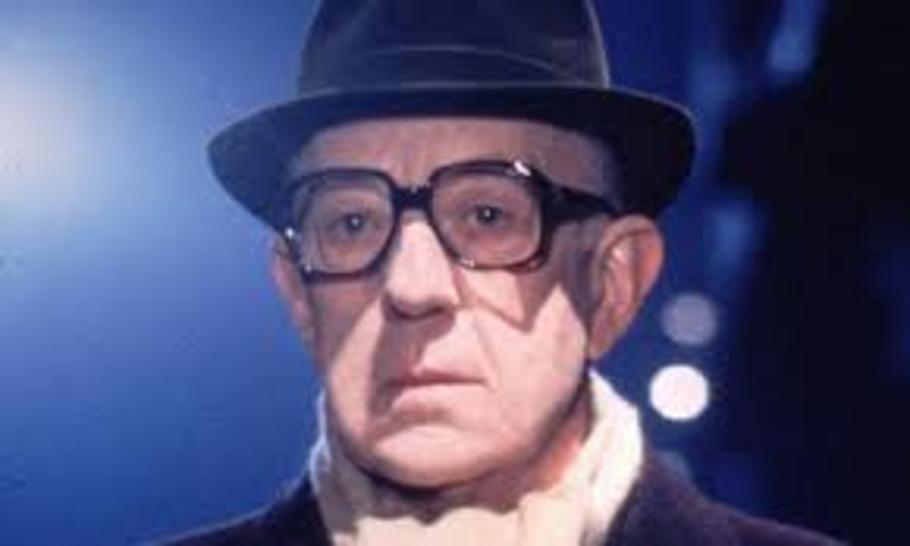
Alec Guinness as George Smiley in Smiley's People
One of the great treasure houses of British culture is the BBC’s TV archive. For years this wasn’t available to ordinary licence fee payers, but now we can access it in instalments on BBC iPlayer. It includes comedy programmes, interviews, documentaries and, best of all, BBC dramas going back to the 1960s and 1970s. These include John Thaw in David Hare’s The Absence of War, Stephen Poliakoff’s famous series Shooting the Past and Perfect Strangers, The Blue Boy with Emma Thompson, Joss Ackland as CS Lewis in Shadowlands. Then there are numerous interview programmes and profiles of famous figures, such as Ken Dodd and Maya Angelou, on BBC 2’s Face to Face; Arena documentaries about Coco Chanel, Richard Attenborough and Bette Davis; and programmes about Amy Whitehouse, John Lennon and Robin Williams in the A Life in Pictures strand.
Perhaps above all, many of these gems are thematically organised. When, for example, Alan Yentob, the founding editor of BBC2’s flagship arts documentary strand, Arena, died last year, iPlayer ran a series of some of the best Arena programmes. Among these were Yentob’s two-part interview with Orson Welles; Nigel Finch’s pioneering documentaries, My Way, Chelsea Hotel and The Private Life of the Ford Cortina; and Anthony Wall’s film about the history of Desert Island Discs. In addition, the BBC produced a special interview with Wall, the longest-serving series editor of Arena. BBC iPlayer also ran a few of Yentob’s interview programmes, Imagine.
These were not just some of the greatest arts documentary programmes ever made by the BBC, they were a reminder of how Arena — and, in particular, Yentob, Finch and Wall — changed arts programme-making. It was a golden age with Bookmark, The Late Show (both also on BBC2) and The South Bank Show (ITV). What was distinctive about Arena was the way it broadened out the subject matter of arts programmes. Previously, many were profiles of key figures from the arts, often tying in with a new book, film or exhibition. Arena changed this with documentaries about very different versions of an iconic song such as My Way, from Sinatra and Shirley Bassey to Sid Vicious, a particular car (the Ford Cortina) and one of New York’s famous Chelsea Hotel, associated with famous figures from the arts from William S. Burroughs and Andy Warhol to Virgil Thomson.
More recently, when BBC1 started showing the second series of The Night Manager, following on from the success of the first series based on John le Carré’s novel, iPlayer started a season of le Carré adaptations. These included the two famous BBC TV series with Alec Guinness, Tinker, Taylor, Soldier, Spy and Smiley’s People, both produced by Jonathan Powell, and his book A Perfect Spy, with Peter Egan; an interview with le Carré, presented by writer and BBC documentary-maker, Nigel Williams; and other spy dramas, including Alan Bennett’s brilliant TV drama, A Question of Attribution, about Anthony Blunt, Michael Caine in Funeral in Berlin and a complete re-run of the classic BBC 1 series, Spooks (2002-11).
This le Carré season told us a huge amount about the writer, of course, but also about the place of spies in modern British culture and how British TV drama both reflected this and changed over the past forty years. When it comes to le Carré himself, what was striking was how he coincided with a particular moment in British culture. Following the building of the Berlin Wall and the Cuban Missile Crisis in the early Sixties, le Carré tapped into our fascination with Oxbridge-educated spies at the height of the Cold War, from the defections of Philby, Burgess and Maclean in the 1950s to Blunt’s exposure in 1979.
Smiley, spycatcher supreme, became an iconic figure, not just because of Alec Guinness’s superb performances, but because of the context of the two BBC series. First, there was the fascination with British spies and the Cold War. But there was something else, the seediness and moral corruption of the British establishment. This wasn’t just about spying. It was their whole world of heavy drinking and smoking, strip clubs, dark misogyny, the braying public school and Oxbridge-educated middle-aged men, brilliantly portrayed by great actors of the time like Joss Ackland (who also played CS Lewis in Shadowlands), Barry Foster and Anthony Bate. This later fed into wonderful performances such as Tim McInnerny’s wonderful portrayal of the duplicitous Oliver Mace in Spooks and the terrifying Richard Roper in The Night Manager.
Le Carré caught this moment in British culture brilliantly. It wasn’t just that he had worked for the British security services in Germany, but also his sense of upper-class male Britain. Educated at Sherborne and Oxford, he had a terrific ear for this world. Arguably, though, his was not as good an ear as that of Alan Bennett, from a very different background in working-class Yorkshire. Smiley may have been the more iconic figure, but as the iPlayer season shows, Bennett’s Guy Burgess (An Englishman Abroad) and Anthony Blunt (A Question of Attribution) are the greater creations.
They belong, of course, to the same enduring British fascination with spies and betrayal from the 1960s to the 1990s. A fascination with spies, of course, but also with Englishness and masculinity. Despite the great performances by Beryl Reid as Connie Sachs, Siân Phillips as Ann Smiley and Eileen Atkins as the tragic Ostrakova, the BBC Smiley dramas are essentially about men and betrayal.
One of the joys of the Smiley series is seeing again some of the great British actors of the 1960s, ‘70s and ‘80s: Guinness of course, but also Michael Jayston, the young Patrick Stewart as Karla, Beryl Reid, Michael Gough and Bernard Hepton (as Toby Esterhase but also famous for a whole generation as the commandant in Colditz). It’s more than just a trip down memory lane. It is like a visit to a beloved museum, bringing back voices and images from yesteryear.
If the acting is one of the great pleasures of these dramas, what is more disappointing is the quality of the film-stock, the lumbering camera movements, the poor sound quality. We forget how bad much TV drama looked and sounded like during these years, before Jewel in the Crown and Brideshead, The Singing Detective and Poliakoff’s great TV dramas in the 1990s. Nostalgia makes fools of us all and one of the best things about these seasons from the archives s how they remind us that even the most acclaimed dramas from the golden age can look so bad nearly fifty years on.
These treasures on iPlayer remind us of the best and the most disappointing qualities of the golden age of British television. And now that we live in an age of illiterate TV critics, most not even born when these programmes were first shown, it is a chance for us all to be our own TV critics and to be introduced (or reintroduced) to one of the jewels in the crown of modern British culture.
A Message from TheArticle
We are the only publication that’s committed to covering every angle. We have an important contribution to make, one that’s needed now more than ever, and we need your help to continue publishing throughout these hard economic times. So please, make a donation.


