Why America First is the last gasp of Pax Americana


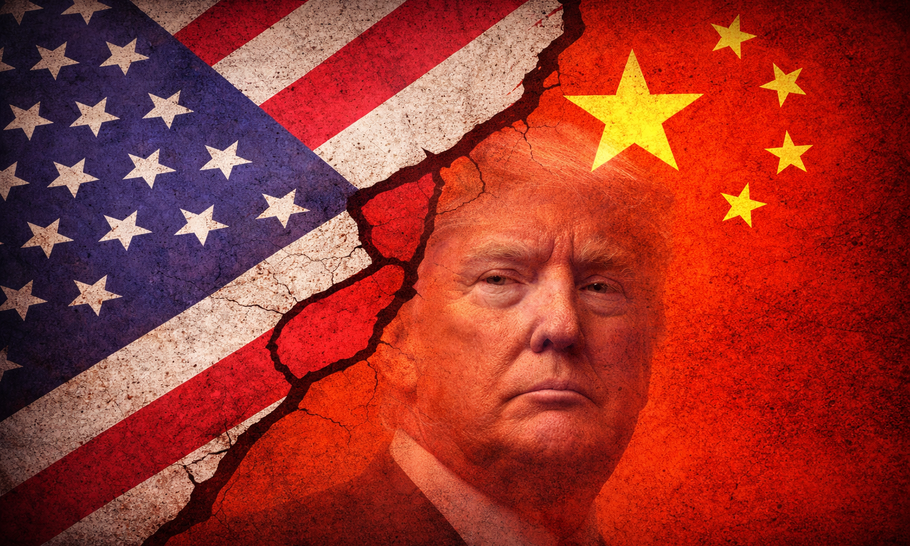
“A great civilization is not conquered from without until it has destroyed itself from within.”
The Durants, The Story of Civilization
As we move into the second month of the American-Israeli conflict with Iran, it feels like a good moment to step back from the daily noise. Because something more important than oil prices or shipping disruption is beginning to show itself.
Yes, the first order effects are obvious. Oil is up. Shipping through the Strait of Hormuz is uncertain. Inflation is creeping back into the conversation. Central banks are once again scratching their heads.
But those are surface tremors. What’s being tested is something much bigger. The system itself.
For most of our lives, that system has been so stable it has become invisible. Goods move. Oil flows. Trade happens. The shelves are stocked. The world, broadly speaking, works.
But it did not happen by accident.
It was built. Deliberately. Strategically. And with a level of clarity that now feels almost alien.
As I’ve written about before in 1945 Franklin D. Roosevelt met Abdulaziz Ibn Saud aboard a United States warship in Egypt’s Great Bitter Lake. The deal was simple. The United States would guarantee Saudi security. In return, oil would flow. Reliably. Predictably. Through trade routes protected by American power. Priced in dollars.
That was the blueprint.
From that and other gatherings in the mid-1940s came what we now call globalisation. Or global trade. Or Pax Americana. Or, if we are being honest, American imperialism. Open sea lanes. Dollar-based trade. Security provided by Uncle Sam.
It was not perfect. It was not always pretty. But it worked.
Oil flowed through Hormuz. Ships passed through Panama. Goods crossed oceans. And over time those routes carried more than oil. They carried everything. Food. Materials. Manufactured goods. Entire economies built on the assumption that those routes would remain open.
And for seventy years, they did.
The result was the most sustained period of growth, poverty reduction and relative peace in human history.
That is what is now being tested.
Because this is not just about Iran. It is about pressure on the US dollar-based trade architecture; a test of the system itself.
Iran has been selling oil to China in yuan. Russia has done the same since Ukraine. Parallel economic structures are forming. Not an ideological split like the twentieth century. Something more practical than that.
Two economic systems.
One based on open routes, dollar settlement and American naval power. Aspiring toward rule of law, liberalism, democracy and market freedom even if sometimes, a lot of the time, it falls short.
The other is based on controlled infrastructure, bilateral deals and yuan settlement, led by China.
Petrodollar versus petroyuan.
Democracy versus Centralism: Rule of Law versus Rule by Law: Liberalism versus Collectivism: Free Market versus State-market control:
For years this parallel economic structure, whether expressed as the belt and road or petroyuans, has been background noise. Gradual. Abstract. Easy to ignore.
But when Hormuz got shut to certain ships earlier this month, things became clearer. Because while the traditional Amercian system is under pressure, the alternative appears to keep functioning but only for those inside it.
And that raises an uncomfortable question. What happens if the world moves from one system to two? From Dollars to Yuan? From Democracy to Centralism? From Rule of Law to Rule by Law? From Liberalism to Collectivism: From the Free Market to State-market control
Which brings us to Washington.
Because the most immediate threat to Pax Americana is not Iran. Or Russia. It is not even China.
It is a lack of understanding in the White House. It is tempting to laugh at the chaos. And there is plenty to laugh at. But the more serious issue is what sits underneath it.
This is an administration that does not understand the system it has inherited. And nowhere is that clearer than in its approach to the Strait of Hormuz.
Donald Trump’s latest statement is that he is willing to conclude military operations in the Middle East without reopening the strait. In effect, leaving Iran in control of one of the most important trade arteries in the world.
Instead, the plan is to tell his allies to deal with it. Which I suppose as a MAGA acolyte sounds reasonable because, actually not much trade which ends up in the land of the free goes through the straight, so what the hell has it got to do with them anyway (forgetting this war kicked off without any consultation with said allies). But the reality is: that’s not how the system works.
The point has never been that America provides security as a favour to its allies. The point is that by providing security, America controls the system. It sets the rules. It anchors trade in dollars. It sits at the centre of global commerce. That is why the system works in its favour.
That is why, over seventy years, the United States has become the most prosperous and successful state in history.
Walk away from that, and you are not saving money. You are giving up the crown. Pulling down the empire from within.
Protecting shipping lanes is not about helping Europe. It is the core mechanism of American power. Those routes are the arteries of global trade. Disrupt them and everything moves. Prices. Supply chains. Politics. Control. Power.
This was understood instinctively by Roosevelt. And reinforced by every administration that followed — until Trump. The bargain was simple. America secures the system. America benefits from the system.
Power through stability.
Wealth through openness.
Influence through credibility.
But that only works if you understand it. And that’s the problem. The Trump administration is not replacing Pax Americana with something new. It is not proposing an alternative model. It is simply failing to understand the one it already has.
“America First”, in this context, is not a strategy. It is self-harm. Because the American empire, if we are willing to call it that, has been one of the most effective and broadly beneficial in history to the rest of the world; certainly to its allies.
Flawed, yes. Inconsistent, sometimes. But built on a simple idea.
Secure the system, and prosperity follows. Now, for the first time in decades, that idea is being undermined from within. While China builds quietly. Patiently. Infrastructure. Influence. Relationships. The United States appears to be stepping back. Not deliberately. Not strategically. Just not really thinking about it or understanding it.
Empires rarely collapse because someone knocks them over. They collapse because their rulers forget how they work. And that is what makes this moment feel different.
Because as pressure builds, through conflict, fragmentation and competing systems, the response from Washington is not clarity or leadership. It is noise. Confusion. At times, farce.
And beneath that farce sits a fairly stark possibility. That the most successful global system ever constructed is not being defeated. It is simply being taken apart. Piece by piece. By the people who inherited it.
A Message from TheArticle
We are the only publication that’s committed to covering every angle. We have an important contribution to make, one that’s needed now more than ever, and we need your help to continue publishing throughout these hard economic times. So please, make a donation.


