Why do we love police procedurals?


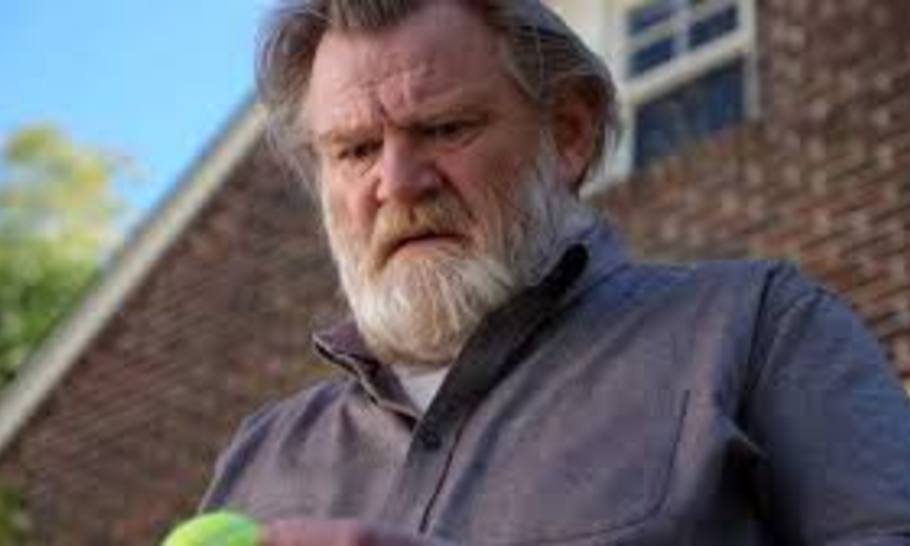
Brendan Gleeson playing Bill Hodges in Mr. Mercedes,
After tea in the late 1940s, Dick Barton, Special Agent, solving crimes and saving Britain with much derring-do, was on the BBC Radio Light Programme. In 1954, the 10-inch television brought Sherlock Holmes into the sitting room from Baker Street, and a year later the kindly constable Dixon of Dock Green from London’s East End. Policing got rougher in the 1960s with Z-cars. By the 1990s, detectives were getting above themselves, with Morse listening to classical music and frequenting Oxford university, or the immaculate Poirot exposing posh villains. You could also watch Maigret, Commissaire in the Parisian Brigade Criminelle, catching sundry French criminals.
For as long as the medium has existed, police procedurals have been as much part of British TV as football. They have a distinctive formal structure: predictable set-piece moments raising expectations and players with defined roles. There’s the police chief trying to close the case, the ill-matched pair of cops who grow in mutual respect, the corrupt detective taking back-handers or the honest detective taken off the case, only to solve it. These days the sleuths are as likely to be American or Continental as British, but the plot lines remain the same. With Line of Duty, The Killing, Patience and many other series, you could join the investigations any evening of the week.
The procedural’s formulary, like Evensong’s, is predictable, comforting and contains moral messages. And you are safely at home on the sofa, ready for surprises, though aware, more or less, of what’s coming next. If you don’t know, you haven’t watched enough. Take opening scenes. The purpose of showing an expanse of water, river, lake or sea is to allow the camera to close in on a body being washed up, floating face downwards. A body face upwards, especially in swimming pools, indicates recreation, corrupt company and the promise of scant bikinis. Recreation by joggers in parks, woods or countryside will inevitably be spoilt; a leg or hand carelessly sticking out of the ground or grass ends any chance of achieving their personal best. If jogging with a dog, it’s a certainty the dog will disappear barking into the bushes. And it’s not because of a rabbit. Dogs have much to complain about their parts, often getting drugged or killed for barking out of turn. Though some receive a lot of patting, usually a sign that a character is a good guy.
Contemporary police dramas have found new ways to signal which character is good and which bad. The detective used to look fondly at their child at bedtime, tuck them up, and gently shut the bedroom door. That was a really good guy about to have a hard time before things came right. If an American, he was likely to get shot. Or the child was going to be kidnapped. Or both. But today we know the detective is a good person if he or she has a parent with dementia, visits them in the care home and is a dutiful son or daughter. All good domestic signals.
After the discovery of the body, alone or with a subordinate, the lead detective arrives, establishing the all-important police hierarchy. The lifting of the blue-and-white tapes and the ceremonial ducking under are followed by complaints that junior uniformed police have allowed contamination of the crime scene. This is extras’ big moment: to look sheepish.
The next set-piece, the morgue, features the ritual with the forensic pathologist pulling down the white sheet that covers the corpse to reveal an actor with a remarkable ability not to blink. In case you’re not convinced the body on the trolley is dead, there often follows a funeral or burial scene with someone standing at a distance from the action: either a mystery figure or the detective. All very predictable.
But fear not, the creative spirit of TV or cinema isn’t dead — not yet. After the preliminaries, it’s time for intensive detective work – and for some viewers, beset by flash-backs and red-herrings, to lose track of the plot. Time for countless murder investigators to develop their different characters through varied, but mostly miserable, relationships. It’s a poor show if the hero isn’t estranged from his daughter, divorced, alcoholic, extremely grumpy or, more recently, putting autistic skills to good use. Female detectives are specially burdened, often dealing with a disrupted work-life balance, caring for rebellious teenagers and fathers with dementia. Visits to care homes fill dull moments between action. Dona Leon’s contented, connubial Venetian Commissario Brunetti, with his academic wife who makes tasty Italian family meals, reached German TV and Amazon Prime, the exception that proves the rule.
We now expect certain scenes to involve modern police kit: helicopters, drone shots, CCTV replays, mobile phones which ring at critical moments, and laptops. In fact, we know a computer geek, preferably hairy and dishevelled, will be needed to make a crucial discovery. But cars remain very important. People cuffed, or having buddy conversations, are endlessly getting in and out of them, when they are not being blown up in them. Though cars are still petrol-driven. No shoot-outs while recharging – yet. Chases are still indispensable to the action, ideally with spectacular crashes along the way.
A less pleasant innovation is the toilet scene featuring much unzipping in the Men’s. The Back Alley, complete with dustbins, once the number one venue for fights, is being replaced by the Toilet. Women detectives spot women suspects hiding guns in cisterns or changing their clothes behind lavatory doors. Or vomiting. Someone being sick demonstrates they’re hungover, or afraid, or upset. Directors need to pull the plug on such excesses of realism.
So all praise to Brendan Gleeson’s Bill Hodges, a retired cop tracking down the damaged, psychopathic killer, Brady Hartsfield, in Mr. Mercedes, based faultlessly on Stephen King’s spooky trilogy, now streaming on Netflix. Mr. Mercedes partly cracks the mold. (Spoiler alert.) The opening scene is a view of a crowd queuing in line for employment, not a lake or forest in sight. A stolen car is the murder weapon. Hodges is pursued (unsuccessfully) by the amorous widow next door. He has a pet tortoise. His police buddy Peter dies of natural causes but he’s helped by two captivating young people, Jerome and Holly, who befriend him and do his laptop tracking. The killer’s mum is poisoned. Jerome’s dog is spared. Several characters have premonitions. In the just-in-time ending Hodges finds the killer but has a heart attack, flagged for several episodes, and is unable to arrest him.
But there are also the set-pieces. A car that blows up. A preternaturally clever villain. Hodges, overweight, unfit, grumpy but charming, courageous and kind, is fixated on an unsolved case and conducts an off-piste investigation. He’s alienated from his daughter, drinks a lot and lives on his own. Brian Gleeson is Bill Hodges just as Alec Guiness was, and always will be, John le Carré’s Smiley.
What is the appeal of these dramas? They provide an hour or so of relative predictability in a world where we don’t know what’s going to happen next, a world overtaken by darkness, dominated by powerful autocrats with scant regard for human life. Watching, we enter another world where the good cop, or private eye, sleuth, or journalist, with their multiple quirks and defects, some like ours, defy the odds to defeat the clever murderous villain. What’s not to like? In the police procedural at least, there is justice after all.
A Message from TheArticle
We are the only publication that’s committed to covering every angle. We have an important contribution to make, one that’s needed now more than ever, and we need your help to continue publishing throughout these hard economic times. So please, make a donation.


