Gettysburg, Trump and the midterms


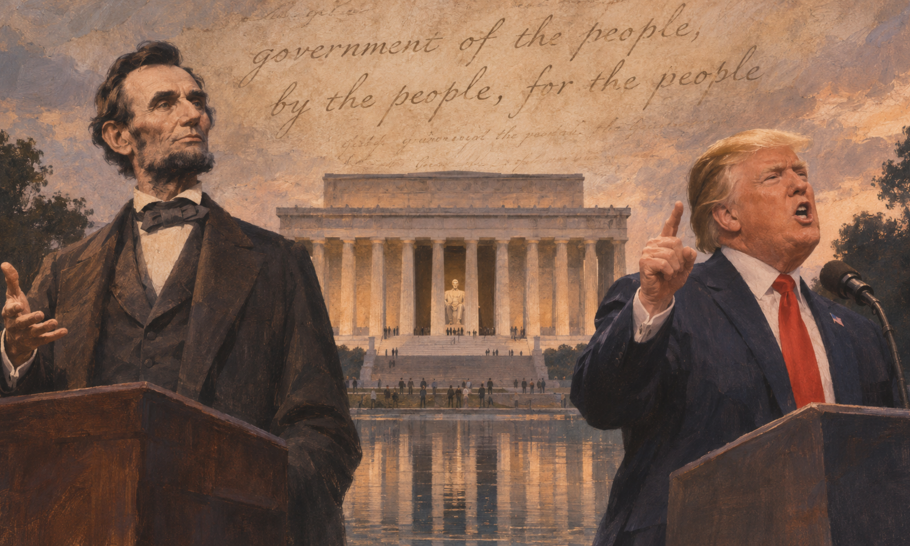
Some might describe what’s just happened to President Trump and the rump Republican party at the US midterm elections as Napoleon meeting his Waterloo. But it would be more historically accurate to compare it to Lee’s failure at Gettysburg in July 1863 with, one hopes, a concomitant healing effect on the tormented American nation.
For readers who are not American Civil War buffs, the Confederate commander Robert E. Lee had taken his formidable Army of Northern Virginia deep into the enemy’s country in the hope of landing a knockout blow against the Union forces by menacing New York, Philadelphia and Washington DC. On July 1, 1863, Lee’s troops then stumbled into the main Union Army of the Potomac near the little market town of Gettysburg, southern Pennsylvania, under the command of General George G. Meade. After two days of inconclusive fighting, both armies had settled into positions along two parallel ridges, facing each other across a wide green valley, the Confederates on Seminary Ridge and the Yankees on the appropriately named Cemetery Ridge.
On the third day, Lee ordered a frontal assault on the Union position, a decision which was questioned at the time by many of his own staff. This involved about 12,000 men under General George Pickett advancing across the valley towards a larger number of Yankees sheltering behind stone walls with plenty of artillery in support. Lee’s men were renowned for their fighting ability as informal skirmishers, but on this occasion they formed up in long lines, fixed bayonets and advanced steadily towards the enemy through a hail of shot and shell, inevitably suffering grievous losses. The assault has gone down in history as Pickett’s Charge, a little unfairly on that brave officer.
It may be too far to drive the analogy but Trump’s advice for his supporters to treat the midterm elections as though the President himself was on every ballot may have been the political equivalent of Pickett’s Charge. The voters saw him coming and expressed their simmering disgust at the shameful conduct of his presidency by giving the Democrats a sweeping victory in both Houses of Congress.
Despite the near-impossibility of the task, a couple of hundred indomitable Virginian soldiers reached and briefly breached the Union line at a point known ever since as the Bloody Angle. The man leading them, Brigadier Lewis Armistead, was severely wounded and taken prisoner to a Union field hospital. There he died the following morning – though not before he had been visited by a number of his former West Point classmates serving in the Union army at Gettysburg, a poignant reminder of the horror of civil war, the call of friendship and of the natural desire for reconciliation.
Gettysburg was the turning point of the Civil War. Lee was never again so formidable an enemy. In November 1863, a cemetery was dedicated at Gettysburg to the dead of both sides. At the dedication on November 19, President Lincoln delivered the immortal Gettysburg Address, which set the scene for subsequent national healing. However familiar they may be, his words (just 272 of them in ten sentences) are always worth rereading.
“Four score and seven years ago our fathers brought forth on this continent, a new nation, conceived in Liberty, and dedicated to the proposition that all men are created equal.
Now we are engaged in a great civil war, testing whether that nation, or any nation so conceived and so dedicated, can long endure. We are met on a great battle-field of that war. We have come to dedicate a portion of that field, as a final resting place for those who here gave their lives that that nation might live. It is altogether fitting and proper that we should do this.
But, in a larger sense, we can not dedicate—we can not consecrate—we can not hallow — this ground. The brave men, living and dead, who struggled here, have consecrated it, far above our power to add or detract. The world will little note, nor long remember what we say here, but it can never forget what they did here. It is for us the living, rather, to be dedicated here to the unfinished work which they who fought here have thus far so nobly advanced. It is rather for us to be here dedicated to the great task remaining before us— that from these honored dead we take increased devotion to that cause for which they gave the last full measure of devotion—that we here highly resolve that these dead shall not have died in vain—that this nation, under God, shall have a new birth of freedom—and that government of the people, by the people, for the people, shall not perish from the earth.”
For devotees of the United States these remain stirring and immortal words, delivered by the man who a year later in November 1864 won a second presidential election for the Republicans – a very different party then from the corrupt and compromised rabble now led by Trump.
A few months later Abraham Lincoln’s second inaugural address on March 4, 1865, again brought it all into a true and moral perspective. In his first inaugural address in 1861, Lincoln had clearly expressed his understanding of the causes of the war then about to commence and his deep Christian faith:
“On the occasion corresponding to this four years ago all thoughts were anxiously directed to an impending civil war. All dreaded it, all sought to avert it. While the inaugural address was being delivered from this place, devoted altogether to saving the Union without war, insurgent agents were in the city seeking to destroy it without war — seeking to dissolve the Union and divide effects by negotiation. Both parties deprecated war, but one of them would make war rather than let the nation survive, and the other would accept war rather than let it perish, and the war came.”
With Gettysburg behind him and the tide of war now turning in favour of the Union, Lincoln looked forward to peace and reconciliation:
“With malice toward none, with charity for all, with firmness in the right as God gives us to see the right, let us strive on to finish the work we are in, to bind up the nation’s wounds, to care for him who shall have borne the battle and for his widow and his orphan, to do all which may achieve and cherish a just and lasting peace among ourselves and with all nations.”
Comparisons are not always odious but it is alas difficult to imagine that Trump would even understand these sentiments, let alone express them so coherently and elegantly. Astonishingly, Trump’s last speech before the midterm election was delivered in Washington in front of the Lincoln Memorial. He devoted it to exaggerated claims about how he had rescued the reflecting pool — which is part of the monument and, until he ruined it, had been one of the ornaments of downtown Washington — and to denunciations of Obama and Biden.
Americans notice these foolish boasts, just as they notice his untrammelled greed. Unfortunately Trump and his acolytes aren’t capable of understanding, let alone responding, to Lincoln’s noble sentiments. Now the American electorate has just reminded their President that his power is not unlimited and that he is accountable to them. Like their ancestors at Gettysburg, the voters still believe with Lincoln that “this nation, under God, shall have a new birth of freedom—and that government of the people, by the people, for the people, shall not perish from the earth.”
A Message from TheArticle
We are the only publication that’s committed to covering every angle. We have an important contribution to make, one that’s needed now more than ever, and we need your help to continue publishing throughout these hard economic times. So please, make a donation.


