The art of being always right


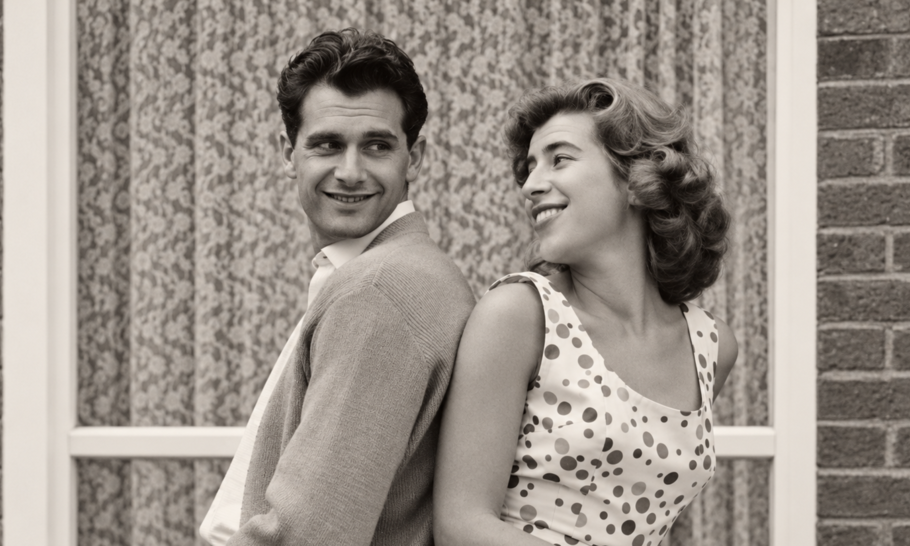
Laszlo Solymar and Marianne Solymar
It is a piece of generally accepted wisdom, shared by many a married man, that a wife is always right. My own experience, gathered over 65 years of marriage, has taught me an even greater truth: my wife, Marianne, was right even when she was wrong. Furthermore, she possessed this remarkable wisdom and foresight long before we were officially joined in holy matrimony. Looking back, a few key moments from our journey perfectly illustrate this unique gift.
A window reflection
The story begins in the summer of 1954 in Budapest. I was on my way to work at the TÁKI, or Távközlési Kutató Intézet (Telecommunications Research Institute). I boarded a bus and spotted an incredibly pretty girl. Being a rather shy young engineer, I did not attempt to “chat her up” as the modern phrase goes. Instead I turned my back and spent the entire journey studying her reflection in the darkened window.
To my great good fortune, the young lady alighted at the exact same stop. Gathering what little courage I had, I asked her out. To my immense surprise she agreed.
Years later, I confessed to her my surreptitious method of observation via the windowpane. Marianne merely smiled. She revealed that she had known what I was doing all along; she had used the very same reflection to watch me watching her. She concluded, upon careful observation, that I was a young man worthy of her interest.
As I quickly found out, she was then a first-year chemistry student at the Technical University of Budapest, the most prestigious university in Hungary. She possessed a formidable intellect to match her striking looks. Having won the national chemistry prize, she had been exempted from university entrance examinations altogether. Clearly her analytical skills were far superior to my own.
Two buses to destiny
In November 1956, during our escape from Hungary following the revolution, Marianne made a spontaneous decision that completely altered the trajectory of our lives.
Upon successfully crossing the border into Austria (an adventure I have detailed in a previous article), we arrived at Eisenstadt, a refugee camp on the Austrian side. We were assigned a spot in a large military tent to spend the night. The next morning I was awakened by a tremendous commotion outside. I wanted to investigate immediately. Marianne, feeling quite exhausted, declared that it was far too early and that we should sleep a little longer.
As it turned out, the commotion was caused by fellow refugees rushing to board a bus bound for France. By the time Marianne had awakened from her slumber, that particular option had long since departed.
However, her oversleeping proved to be fortunate. We were put on the very next bus instead. This one took refugees to the Vienna railway station, bound for a train heading straight for England. We boarded the train, crossed the Channel, and lived happily ever after.
A culinary catastrophe
England treated us with immense generosity. Within a remarkably short period of just a few weeks, we had secured a flat and had found gainful employment. To celebrate, we decided to invite all our close friends — who, like us, were Hungarian refugees — to a grand house-warming party.
I should note that when we married in 1955, Marianne was just 19 years old. By the time we reached British shores, she was 20. She had never cooked a single meal in her entire life. This was the consequence of having been raised in a rather crowded Budapest flat alongside her mother, her grandmother, and her great-aunt. This formidable matriarchy took it upon themselves to shield her from all domestic chores, fiercely decreeing that she was never to touch such menial tasks.
Yet, completely undeterred by this utter lack of preparation, she fearlessly announced that she would prepare a magnificent beef roast in the oven. Naturally, I did not interfere. Cooking was certainly not on my list of engineering skills.
By the time our guests arrived, the meat had been roasting for a full three hours. It looked rather presentable. However all subsequent attempts to carve it failed completely. Knives proved utterly useless. In desperation we even retrieved my jigsaw from the toolset, but to no avail. The beef remained entirely structural.
Fortunately, we had an ample supply of ice cream in the freezer and the evening was a roaring success. Our friends were clearly delighted by the spectacle. The next day, all the guests who attended the party phoned their mothers back in Budapest to report on Marianne’s architectural achievements with beef. We discovered this almost instantly, as those mothers immediately phoned Marianne’s mother to offer their congratulations.
Science, shares and soufflés
Marianne quickly conquered both the practical and academic worlds. She went on to earn an MSc from the University of Oxford and worked in a research laboratory at the John Radcliffe Hospital, studying pre-eclampsia and spina bifida. As if conquering complex biochemistry and English life weren’t enough, she also became completely fluent in French.
Marianne’s analytical sharpness even extended to the financial markets, where she possessed an uncanny, intuitive feel for which shares to buy or sell. Her investment formula was disarmingly simple: invest in enterprises that produce genuinely useful things. When the ICI Courtaulds takeover attempt shook the financial market, she very bravely invested in Courtaulds — and made a small fortune. Long before they became the global disruptors they are today, she insisted on acquiring shares in Amazon and Tesla. Her financial foresight proved to be a very welcome addition to our two academic salaries.
In addition, Marianne possessed a natural genius for innovative enterprises, conceptually inventing Airbnb long before the corporate world caught up. Through a series of brilliant house swaps, she secured us a regal existence in Venice for several consecutive summers, followed by an equally magnificent stay in Grenoble.
Meanwhile, our family grew, as we were blessed with two daughters, Gillian and Lucy. Even with the demands of a brilliant academic career, Marianne excelled as a mother and completely mastered the domestic arts. She became an amazing cook, seamlessly blending Hungarian and British cuisine. Her repertoire included soufflés and her legendary cream cakes, favourites being chocolate and raspberry, which brought sweet celebration to every family gathering.
As we approach the 70th anniversary of our morning of oversleeping in the tent in Eisenstadt and our fortuitous arrival in England, I can confidently say that taking that bus in Budapest in 1954 and allowing my wife to dictate our travel schedule in 1956 were the best decisions I ever made. I still look back on our life together through that very same window reflection, endlessly grateful for her lifelong art of being always right.
This was the last of Professor Solymar’s many contributions to TheArticle. He died on October 15, 2026, at the age of 96. We offer our deepest sympathy to his daughters, Gillian and Lucy, and to his family and friends.
A Message from TheArticle
We are the only publication that’s committed to covering every angle. We have an important contribution to make, one that’s needed now more than ever, and we need your help to continue publishing throughout these hard economic times. So please, make a donation.


