Serbia: politics, football and graffiti
 by
Guy Gabriel
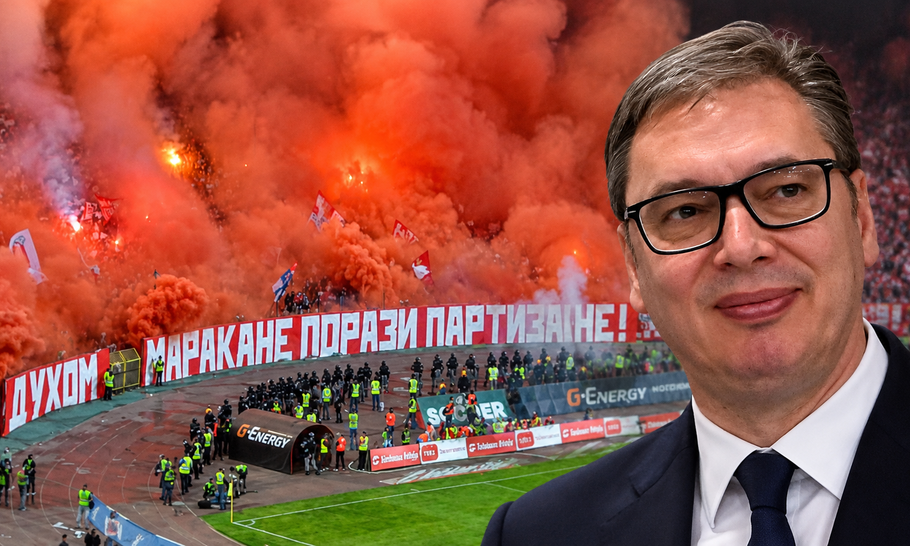
President Vučić & Football
Serbia goes to the polls this Sunday, October 25. Popular discontent with the ruling political class is sufficiently widespread that the re-election of President Aleksandar Vucic will not be a given; he needs muscle to win. But whether he wins or loses, election-related violence is widely predicted.
In this scenario, one of the most interesting – and worrying – aspects of the Serbian president’s arsenal, as he prepares to retain power, is weaponised nationalism. As the guardian and dispenser of Serbian heroism, a persuasive case (which glosses over real election issues) for re-election can be made if somehow the campaigning can be made to revolve around feelings of hurt pride and the restoration of former glories, with a good measure of intimidation thrown in.
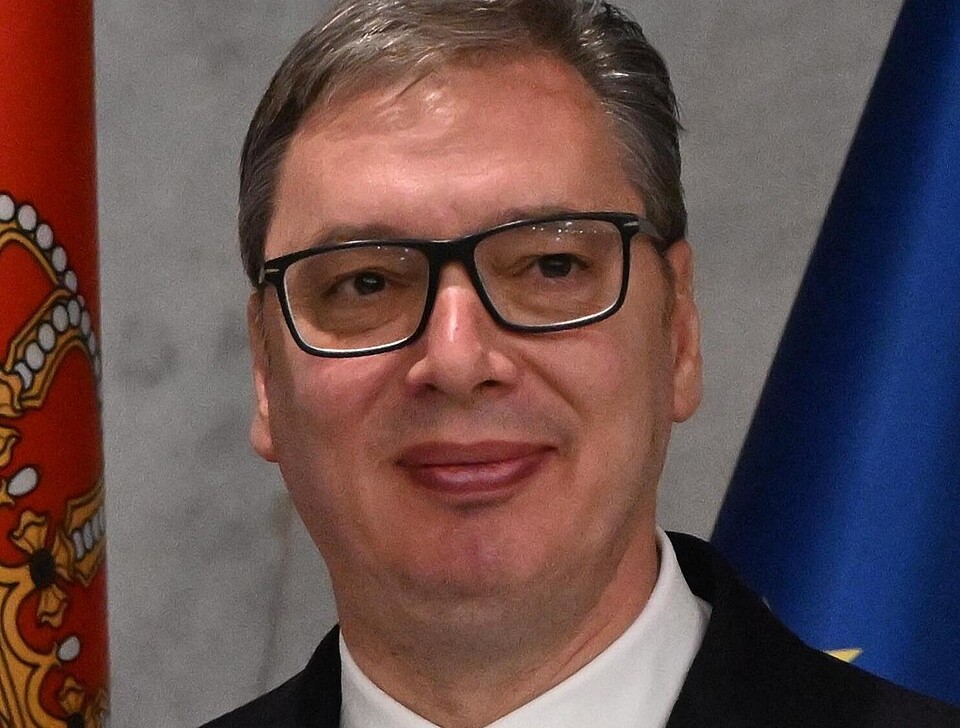
Aleksandar Vučić in 2025
On 9 September, Vucic called snap Parliamentary elections to take place on 25 October, which he followed up by resigning as President on 27 September. This cleared the way for him to stand as Prime Minister, a job swap keeping him in power, should he win. The Serbian constitution does not allow him to have a third term as President, but being Prime Minister is a handy workaround.
The elections come amid some difficult times in Serbia, which have given rise to two years of student-led opposition, a force growing in confidence and coherence, and importantly, trustworthiness in the people’s eyes. Tens of thousands of protesters frequently take to the streets to rail against corruption and economic troubles, among other things. All the same, Vucic is in a handy position to be returned to power. In his corner, he has a firm grip on the media and the state security organs, and benefits from well-established patronage networks which have been functioning for years. Vucic’s party, the Serbian Progressive Party, has been ruling since 2012, and he was Prime Minister first in 2014, becoming President in 2017.
The students say they are calling for the rule of law; Vucic says they are an embodiment of lawlessness, and foreign-funded to boot. If you are under attack from foreign forces, the playbook suggests, then nationalism is the riposte. But it is the weaponised nationalism and the way in which it is wielded in Serbia which is a fascinating aspect.
A case in point is the recent death of Ratko Mladic, the “Butcher of Bosnia”, who died in jail in The Hague. His death was announced on 27 August and his body was flown to Serbia eight days later, arriving to a hero’s welcome and military honours, organised by the Serb government. As a convicted war criminal, Mladic did not receive an official state funeral (the government still wishes to join the EU and is wary of offending its sensibilities), but otherwise all the stops were pulled out. At his funeral in Belgrade the Patriarch of the Serbian Orthodox Church officiated; it was attended by several government ministers and attracted many thousands of mourners.
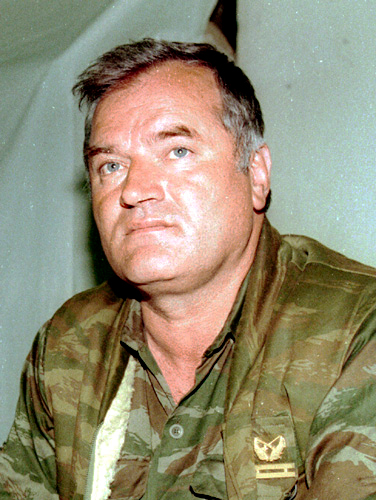
Mladić in 1993
Mladic was a professional soldier, a Bosnian Serb, who had begun his career serving in the Yugoslav Army, and then commanded the Republika Srpska Army from May 1992. This was the Bosnian Serb Army which fought in the Bosnian war 1992-95, besieging, shelling and sniping Sarajevo for 1425 days, and which was found to have committed genocide in Srebrenica in July 1995. Mladic was found by the International Criminal Tribunal for the former Yugoslavia in 2017 to have command responsibility for both the siege of Sarajevo and Srebrenica. He was convicted on ten charges: five of crimes against humanity, and four of violations of the laws or customs of war, and one of genocide. Mladic himself was not found and arrested until 2011 (in Serbia, perhaps unsurprisingly), 16 years after the Dayton Accords settled the Bosnian war.
The night before Mladic’s funeral, on the evening of Sunday, 6 September, as the Serbian SuperLiga fixture list would have it, Belgrade’s two premier football teams and bitter rivals – Red Star Belgrade and Partizan Belgrade – played their 180th match. Red Star is a team with a robust subculture and famously ultra fans, the sort of fans who, as experience proved during the Bosnian war, can be raised into paramilitary units when needed. At the match, Mladic hero worship continued to pour out; an enormous banner was unfurled showing his face, and a minute’s silence was held.
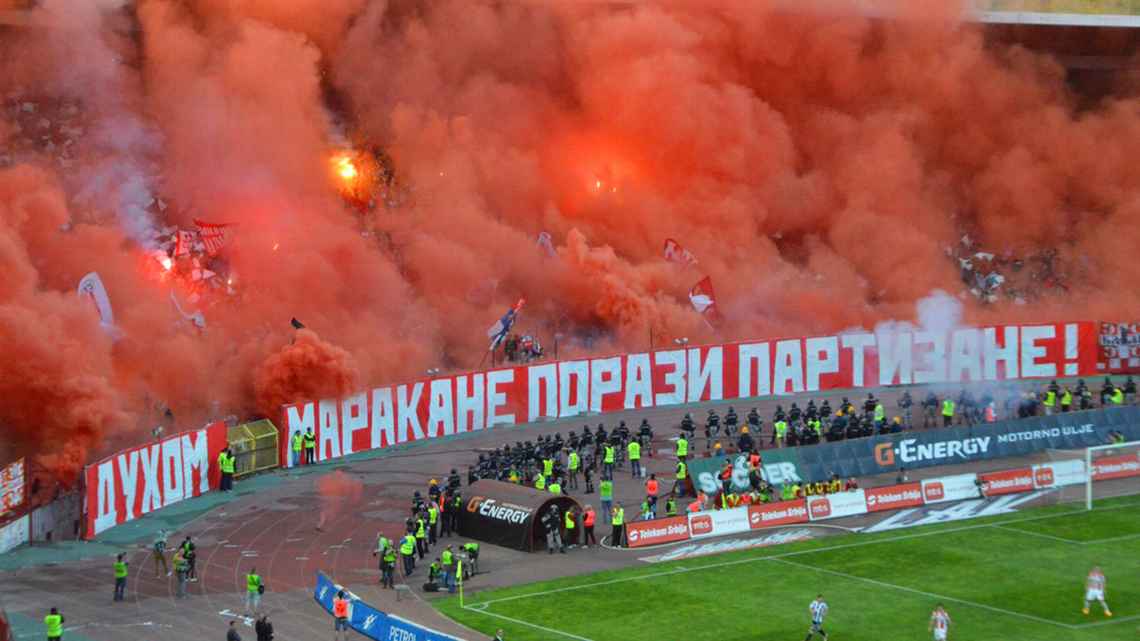
Red Star Belgrade
One week before Mladic died, I went to a Red Star Belgrade football match, where the veneration of Serb heroes is on show as standard, unprompted by the recent death of a “hero”. At the ultras’ end of the ground, a large banner depicting Field Marshal Zivojin Misic (or possibly Major Dragutin Gavrilovic, it’s hard to tell definitively) was on show; war heroes both. These are just the sort of people Serbian nationalists can get behind, who feel their pictures should be displayed at a football match. After all, outside the Rajko Mitic Stadium sits a (decommissioned) Soviet T55 tank, a particularly martial present from the fans to the club in 2019. That warm August evening, children were enjoying taking selfies on it.
The death of Mladic brought back to the fore notions of Serbian heroism, which habitually sit just below the surface at easy recall. But more than this, injured pride and denial are thrown in to the cauldron, useful quantities to call upon if you are a campaigning politician, preferring to whip up a storm rather than make reasoned appeals to an electorate.
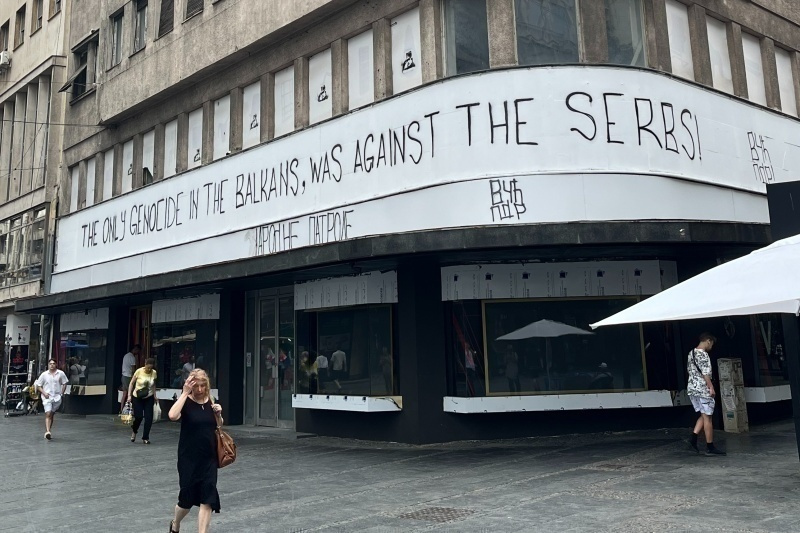
During a visit to Serbia in April this year, as I walked across Belgrade’s Republic Square, I noticed someone had daubed across a white wall, high up in large black letters, this message: “The only genocide on Balkans [sic] was against Serbs.” Republic Square is about as prominent and central as you can get in Belgrade – around it is a wide range of smart cafes and restaurants, shops and tourists, while a little further ahead is the Belgrade Fortress, comprising the old Citadel and Kalemegdan Park, which sits just above the meeting point of the Sava and Danube rivers. I was told that the message which denies the genocide in Srebrenica began to appear about five years ago. This is a state-sponsored graffiti, daubed there by “People’s Patrols”, though in the past, civil society organisations have painted it over.
This message is part of a palette of political distractions used to brush aside the troubles of today – particularly economic hardship and corruption, which naturally the ruling party is supposed to alleviate. Meanwhile, another part of the palette, the hero-worship at football matches, paints a picture of former glories, something supposedly tangible to hang on to as you await better days. Lately, a gambling place – Volcano bet & slot – has opened in the premises which sits below the wall that hosts the message. So in August, when I crossed the square again, it had been painted over, perhaps for propriety’s sake, at least for now.
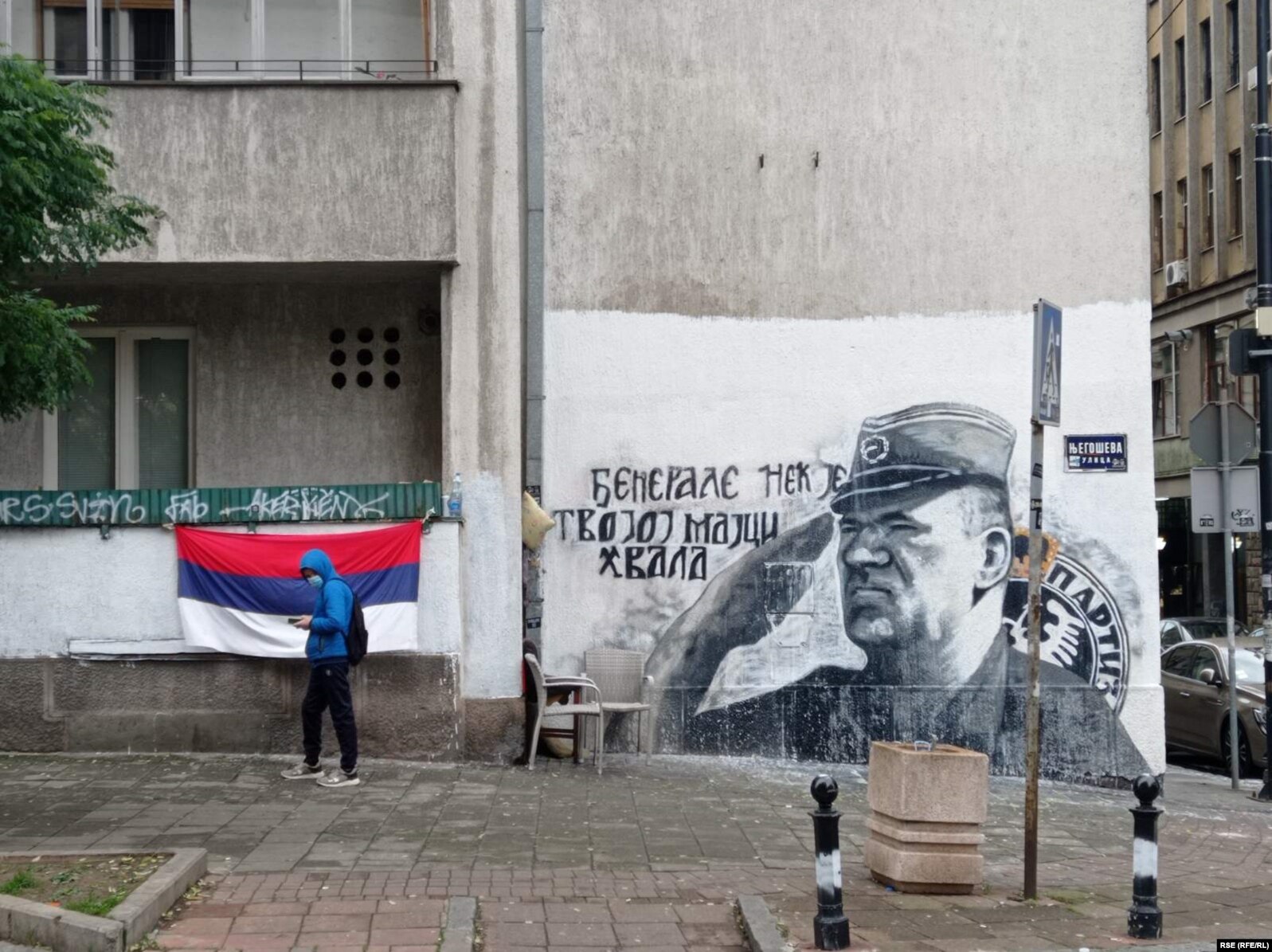
Central Belgrade: a mural to wartime Bosnian Serb Army commander Ratko Mladic
But more broadly, the environment is one where politically engaged daubers and counter-daubers spar using graffiti. Opposition to the ruling party has blossomed over the last two years, led by students incensed by poor governance and corruption. In November 2024 in Novi Sad, Serbia’s second city, 100 kms to the north of Belgrade, a 48-metre long concrete canopy of the main railway station collapsed, killing 14 people, and injuring three – two of whom were later to succumb to their injuries. Accusations of shoddy workmanship and corruption abounded, and protests sparked across the country – the largest seen since the overthrow of former President Slobodan Milosevic in 2000. The Novi Sad investigation is ongoing, but the charges against senior officials who had been indicted have been dropped. It continues to be emblematic, with students driving the fresh political currents as a direct challenge to the ruling party.
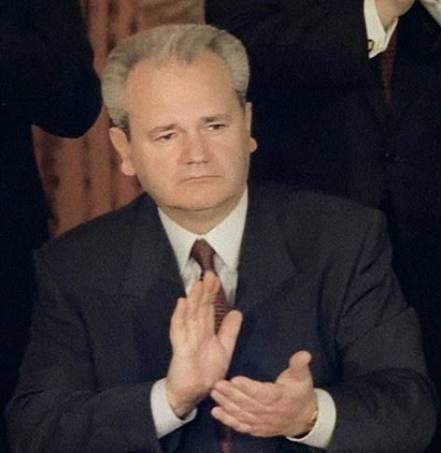
Milošević in 1995
However, the ruling party has grit, experience and ruthlessness. Against the students and the ground they are winning in the popular imagination, the pithy message “FCK BLK” has appeared on many streets of Belgrade. This is the pro-government message “f*** blokaderi” – the students who blockade the streets as part of their protests. Fewer letters, the modern dropping of vowels. These letters are everywhere; it is painted in so many places in so many streets that it’s clearly an organised effort – the People’s Patrols again.
But this is about more than a direct contest between politically engaged graffiti artists. There is violence attached, allegedly in the pay of the ruling party. The Times recently carried an interview with someone who said he was an organiser of the thugs. In early August, amid a bloom of the FCK BLK countercampaign, Stevan Filipovic, a Serbian film director, filmed someone spraying graffiti on a wall of a protected building. The one spraying was then joined by five other youths, who beat Filipovic and stole his phone, later tracked to the Ministry of Interior, and then a town in Kosovo.
Though the students may be providing some measure of hope on the political scene to some, are their protests much more than a blip in the general scheme of Serbian politics? While it is clear that the number of student protesters on the streets far outnumber those venerating Mladic, many fear simply that the way in which things are done in Serbia will remain the way they have always been done – the House always wins. And that way is to deny, to distract through hero worship, and to maintain a strong grip on power, shadily and forcefully if need be.
That is true at the level of the nationalist elites, and at the level of the football ultras, whether or not many tens of thousands protest against the ruling party. So, as can be seen at the Red Star Belgrade football ground, you see military strength venerated and war criminals hero worshipped – who cares what anyone may think about that. Such things are enough to tip an election your way, if you wield them well enough.
A Message from TheArticle
We are the only publication that’s committed to covering every angle. We have an important contribution to make, one that’s needed now more than ever, and we need your help to continue publishing throughout these hard economic times. So please, make a donation.


