The tragedy of Emmanuel Macron
 by
Ian Oakley
Emmanuel Macron had it all when elected President of France in 2017. The mainstream global media pointed to him — after the shock of Brexit and Trump — as a sign the globalist order was fighting back. The people of France had voted for the young former banker, at the head of a newly formed centrist, pro-European movement. Fast forward to 2026 and it has all gone horribly wrong for the man from Amiens.
At the height of his power in 2017 — with a huge parliamentary majority — he began to reform France. One of his first reforms was to slash the high taxes that France had imposed on high earners and the wealthy, under the hapless President Hollande. It was a perfectly sensible technocratic move in itself, raising more revenue in the long term. But it turned the Left against Marcon. Hollande dubbed him “President of the Very Rich” and it stuck, because — instinctively — this is who Macron identified with. And everyone knew it.
The first true rebellion against Macron’s policies came not from the traditional urban, Left-wing areas, but from the rural communities of France, when the Yellow Jacket protests erupted in late 2018. The primary cause was rising fuel prices, a big issue in the vast rural areas of France, but it was deeper than that. The Macron government was not only increasing fuel duty, but also reducing the speed limits on rural roads. There was a general feeling that Macron did not care about rural France and its problems, being more interested in reducing fossil fuel emissions. Being French they were not just going to rollover but took to the streets, or in the case of rural France their local roundabouts, paralysing traffic. In the end Macron bought them off, dropping the increase in fuel duty, but the damage was done. While Macron easily won re-election in 2022, his movement lost their majority in the National Assembly and formed a minority administration.
Macron was not deterred and pushed for a pension reform, a solid centrist thing to do, with the French retiring at 62 — much earlier than other West European countries. Macron finally managed to get it through in 2023, by using a procedure to by-pass a parliamentary vote. What did all this political pain achieve? A two year increase, with various carve outs and exemptions. A low-level improvement that voters are sick of across the western world. It also prompted Macron — in his frustration — to call a snap election in 2024, which ended up not with a new Presidential majority, but a chaotic three way split, between a broad Left, the Centrists and the hard-Right of the National Rally.
Since 2024 a general sense of malaise has gripped French politics and this came to a head with the October riots. The French state’s response symbolised Macron and his failing grip on politics. Faced with student protests over school funding, the French government was more concerned about provoking protesters than preserving public order, so demanded the police stop using stun grenades after a 15-year-old lost his hand. As night follows day the extremist elements smelt weakness and riots ensued, unchecked by a demoralised French police.
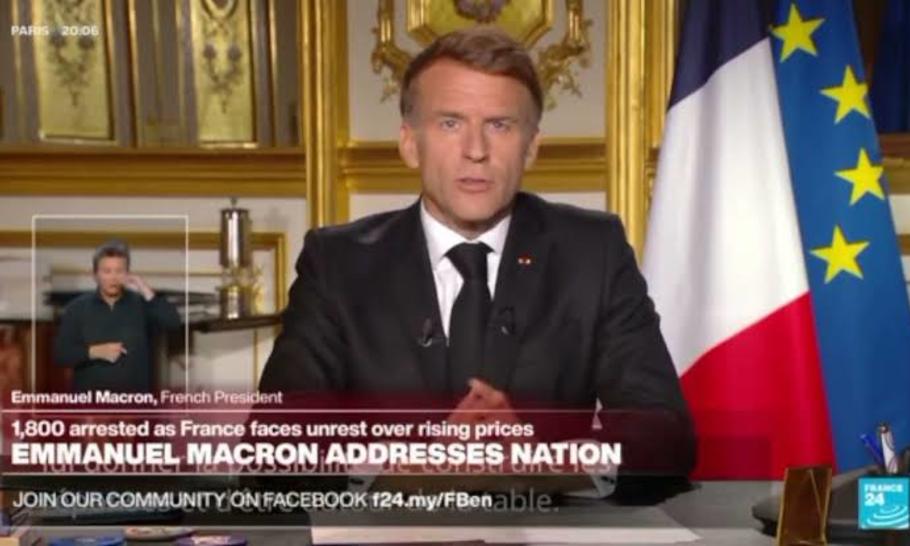
In response the French Prime Minister ordered the police to get a grip, again, and Macron gave a weak address, before jetting off to the Gulf. Meanwhile millions of ordinary French voters seethe, on the Left, but also on the Right. The prospect of hard-Left vs hard-Right in the second round of the 2027 French Presidential election just came a step closer.
Ultimately the energy and arrogance that made Macron President before he was 40 was also his undoing. Many great sportsmen and women make bad team captains, because they do not understand their team members are not as exceptional as them. He also lacked the cunning and skills, produced by years of long political struggles, of a Mitterrand or a Chirac. Macron just does not understand his fellow Frenchmen and women, in the way De Gaulle or Clemenceau did, because he is too different from them. His glittering career made him the darling of Davos and the Economist, but cut him off from ordinary France. He does not understand a second generation migrant, in a rundown suburb, struggling to get a job or the fifth generation farmer who is struggling with the price of diesel, that might force him to give up his farm.
It is only in the fashionable Parisian districts that Macron is truly at home, where it is natural to go to dinner parties and talk about AI start-ups or how racist anyone who objects to mass migration really is. Those Parisians are likely to find the new President of France in 2027 is not going to be their liking. That is the legacy — and the tragedy — of Emmanuel Macron.
A Message from TheArticle
We are the only publication that’s committed to covering every angle. We have an important contribution to make, one that’s needed now more than ever, and we need your help to continue publishing throughout these hard economic times. So please, make a donation.


