Chess960: anathema to our game


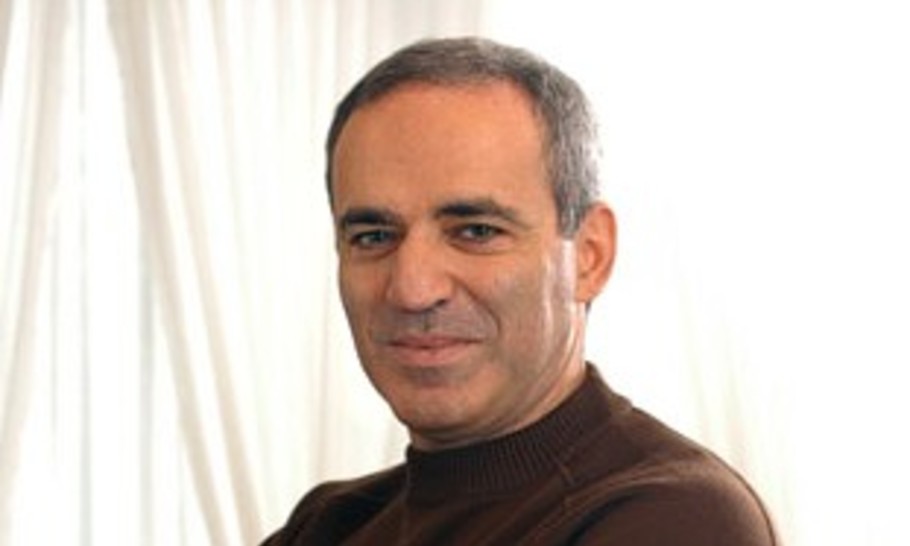
Kasparov in 2007
Chess960 (also known as Fischerrandom or Freestyle Chess) is often presented as a bracing corrective to the alleged decadence of modern chess. It takes the pieces of the back rank and shuffles them into one of 960 possible starting positions, and its advocates insist that, by abolishing opening memorisation, it restores honesty to the game, compelling players to think for themselves from the very first move. There is some truth in this claim. Yet it is equally true that the question of fairness, which is generally brushed aside with a flourish of rhetoric, is far from settled. Recent studies suggest that certain starting positions may confer a measurable advantage upon White, thereby disturbing the comfortable assumption that randomness and justice are necessarily the same thing.
Is Freestyle chess a tougher game because it removes opening theory? In standard chess, elite players memorise enormous quantities of opening theory, sometimes playing the first dozen moves with all the conscious deliberation of a man remembering his own name. Chess960 makes pre-game memorisation impossible and, its advocates claim, thereby produces a purer test of skill, creativity, and an understanding of general chess principles. Players, including former world champion Magnus Carlsen, are compelled to calculate and adapt from the beginning, rather than proceeding along prepared lines.
By producing unfamiliar positions, Chess960 leads to more blunders and fewer draws. This is regarded as a virtue in professional chess, where “draw death” at the highest levels is a genuine concern.
All this sounds admirable; indeed, it appeals powerfully to an age which distrusts tradition and worships novelty. But it is one thing to make a game harder and quite another to make it fairer. The intention of Chess960 was to level the playing field by removing opening theory, but recent analysis suggests that the playing field is not thereby made perfectly level.
A study by physicist Marc Barthelemy, highlighted in The Times in a recent report on January 5, employed the powerful Stockfish engine. He found that the traditional White advantage (White moves first) remains in almost all of the 960 positions, but that the size of this advantage varies considerably. In what follows, I have drawn on an insight into his paper by Paul Arnold.
Some starting positions magnify White’s advantage, while a few may slightly favour Black. The study therefore revealed a wide range of positional balance among the 960 possibilities. The analysis suggested that the most balanced position is #198 (QNBRKBNR), while position #80 (BBNNRKRQ) gives White the greatest advantage. The standard classical chess starting position is, in fact, more asymmetrical and less balanced than the average Chess960 position.
Supporters of the variant reply that these imbalances are determined by chance before the game begins, rather than by months of selective opening preparation. This, they argue, makes Chess960 a superior measure of raw chess ability. The International Chess Federation (FIDE) has accepted the argument in practice, officially recognising the variant and hosting World Championships for it.
Yet we should beware of confusing official recognition with intellectual soundness. I find it sickening to see the heretical proponents of so-called Freestyle Chess mafficking about the 100% (9/9) score by Magnus Carlsen in the recently concluded Grenke Open. Fanatical adherents of the new heresy are ululating with gay abandon and celebrating the fact that Magnus has outperformed, in a ratings sense, the superhuman rating performances of the chess Immortals, such as Bobby Fischer and Alexander Alekhine.
Such misplaced jubilation forgets the elementary fact that Freestyle ratings cannot legitimately be compared with established chess ratings. Freestyle chess consists almost entirely of tactics, since the random disposition of the pieces at the beginning renders such strategic concepts as pawn structure virtually irrelevant. To pretend otherwise is to practise a species of intellectual doublethink. One might as well compare rating performances in chess with exploits in Tiddlywinks, Marbles, Shatranj (the ancient ancestor of chess), Shogi (Japanese chess), Xiangqi (Chinese chess), or Weichi, aka Go, that venerable oriental board game in which territory counts rather than checkmate.
A further opinion was shared with me by my colleague Adam Black. He thinks that the rationale from which Chess960 proceeds is fallacious. “(The shuffle of pieces) does not remove theoretical learning from playing the game, in fact, it makes the mountain of learning (eventually) 960 times greater, because a database of learning will spring up, and those that operate more from memory than intellect, will enjoy an even greater advantage than is currently the case. The counter-proposal would be to look at the new strategic approaches that sophisticated and novel analytic processes already bring to the traditional game. AlphaZero immediately comes to mind. How different might the outcomes of Barthelemy’s research have been had he used AlphaZero, rather than Stockfish, to analyse the 960 openings’ status?”
The error, then, is not in playing Freestyle Chess, which may be an entertaining and even instructive diversion, but in claiming for it a moral and historical superiority which it does not possess. To confuse difficulty with depth, and novelty with truth, is a mistake that chess, of all games, ought to be particularly careful not to make.
And now to heresy in chess, and to call the abomination by its name: shuffle chess, chess 960, Chess 9XL or Fischerrandom. I must confess to feeling that common resentment, doubtless experienced by the 300 or so orthodox bishops at the Council of Nicaea in 325 AD, when confronted with the heresy of the Alexandrian Presbyter Arius (256–336 AD), who claimed that God the Son was subordinate to God the Father.
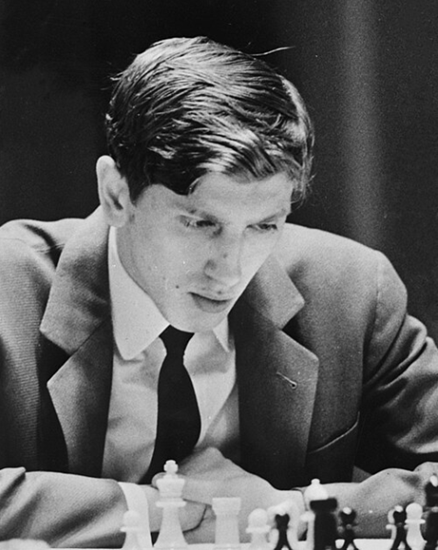
Robert J. Fischer: Manhattan Chess Club blitz tournament, August 1971
photo credit: Dutch National Archives (Anefo collection): CC0 1.0 Universal Public Domain
Shuffle chess was popularised by that quintessential demon, Heresiarch and obliterator of his fans’ expectations and desecrator of their loyalty, Bobby Fischer. In my opinion, permitting players to arrange their pieces at random at the beginning of the game represents a feeble echo of the harmony, beauty and balance of the orthodox initial chess array. It is fuelled by a disinclination to master opening theory and fortified by the endorsement conferred upon it through Fischer. Respectable status, encouraging it to become confused with the real thing, has been acquired still further through the lure of “all corrupting gold”, as Shakespeare puts it in Richard III. Players of the calibre of Grandmaster Wesley So and even the reigning World Champion Magnus Carlsen have been tempted to dignify it with their presence in tournaments where the abomination prevails. One such was the 9XL event in St. Louis, held in the second week of September, where a monetary fund of $150,000 was at stake, with Leinier Dominguez winning first prize and $37,500, ahead of an illustrious field which included Garry Kasparov, Fabiano Caruana and Lev Aronian.
What can be the justification for shuffle chess when the possible permutations of chess proper are so enormous (ten to the power of 120, as I pointed out in my column Dr Siegbert Tarrasch and his search for meaning)? If one is bored with chess, then why not venture into some of the entrancing oriental alternatives, such as Xiangqi (Chinese Chess), or Shogi (Japanese Chess), where excitement is intensified by the fact that all pieces, even when captured, can re-enter the fray, but for the opposing side?
Once one heresy takes root, the pestilence spreads. In Dortmund, the former scene of many a fine clash of classical chess, a match was staged in July between two ex-World Champions, Viswanathan Anand and Vladimir Kramnik, where castling was prohibited! One might as well enfeeble the game of cricket by abolishing the ability to hit a ball for six. If these ex-Champions desired to challenge their minds with a different game, might they not have reverted to the authentic game of Shatranj, that pre-Renaissance, pre-castling ancestor of chess, which possesses its own immense subtleties, as revealed in the games and puzzles from the cultured Baghdad Caliphate of As Suli (880–946 AD), Al Lajlaj (900–970 AD), and Al Adli (circa 840 AD), who was the original Aliyat or Grandmaster. In any case, the resources of conventional chess are far from drained.
It is further my contention that Shuffle chess tends to lead to boring, tedious and shapeless games. During September that peerless hero of the chessboard, Garry Kasparov, very unwisely chose to contest a Shuffle chess match against his old rival Vesselin Topalov. Topalov, it will be recalled, earlier this year had suffered a humiliating wipeout against the prodigious Turkish teenager Erdogmus, in classical chess. Now Topalov is wiping the floor with Kasparov in Shuffle chess. Kasparov is beginning to make a laughing stock of himself by jeopardising the reputation earned in his glory days through involving himself in this appalling heresy. I do not even believe that the public finds such encounters of any interest. On the popular chessgames.com website, at the time of writing, only one of the Kasparov v Topalov shuffle games has attracted any viewer comment of any sort. The rest have all been ignored.
This week’s game is a tragic warning about the dangers of risking one’s intellectual legacy in pursuit of a Faustian phantom of rejuvenation. Starting from this:
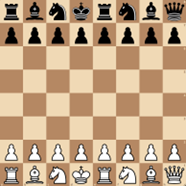
Veselin Topalov vs. Garry Kasparov
Clutch Chess: The Legends (unorthodox), Saint Louis, 2026, round 8
- d4 g6 2. c3 e5 3. f3 c6 4. Nd3 Nb6 5. Bc2 Ne6 6. de5 Be5 7. a4 f5 8. e4 fe4 9. Ne5 Qe5 10. Re4 Qd6 11. Nd2 Nc5 12. Re8 Ke8 13. O-O-O Nca4 14. Bd4 Black resigns 1-0
In new computer analysis of the final position we learn that better than 14… Nc5, is …Kd8. The line continues with 15. Qg1 Qf8 16. c4 d6 17. Ne4 d5 18. Qe1 Nd7 19. cxd5 Nab6 20. dxc6 bxc6, and with a naked king isolated with all but one minor piece remaining, our once great protagonist decided that the better part of valour was the discretion to discontinue.
As a one-time fan of the great Kasparov, all I can do is lament his Ozymandian decline and weep for the vanished glories of les neiges d’antan.
Ray’s 206th book, “Chess in the Year of the King”, written in collaboration with Adam Black, and his 207th, “Napoleon and Goethe: The Touchstone of Genius” (which discusses their relationship with chess) can be ordered from both Amazon and Blackwell’s. His 208th, the world record for chess books, written jointly with the late chess playing artist, Barry Martin, Chess through the Looking Glass, is now also available from Amazon.
A Message from TheArticle
We are the only publication that’s committed to covering every angle. We have an important contribution to make, one that’s needed now more than ever, and we need your help to continue publishing throughout these hard economic times. So please, make a donation.


